


Introduction: Technology That is redefining Hospitality
It is no longer sufficient to have technology. The thriving businesses do not only possess technology but embrace the appropriate technology. No other thing is transforming hospitality like Artificial Intelligence (AI)
In the coming five years, the AI will revolutionize all aspects of the hospitality sector including operations, customer service, and profitability. Future-thinking corporations will not be left wondering whether or not they should embrace AI but how to implement it
1. Smarter Guest Experiences: AI in the the Front Desk
There is a lot of skepticism that AI may actually serve customers in a good way, but as the hotels of today demonstrate, AI can do it.
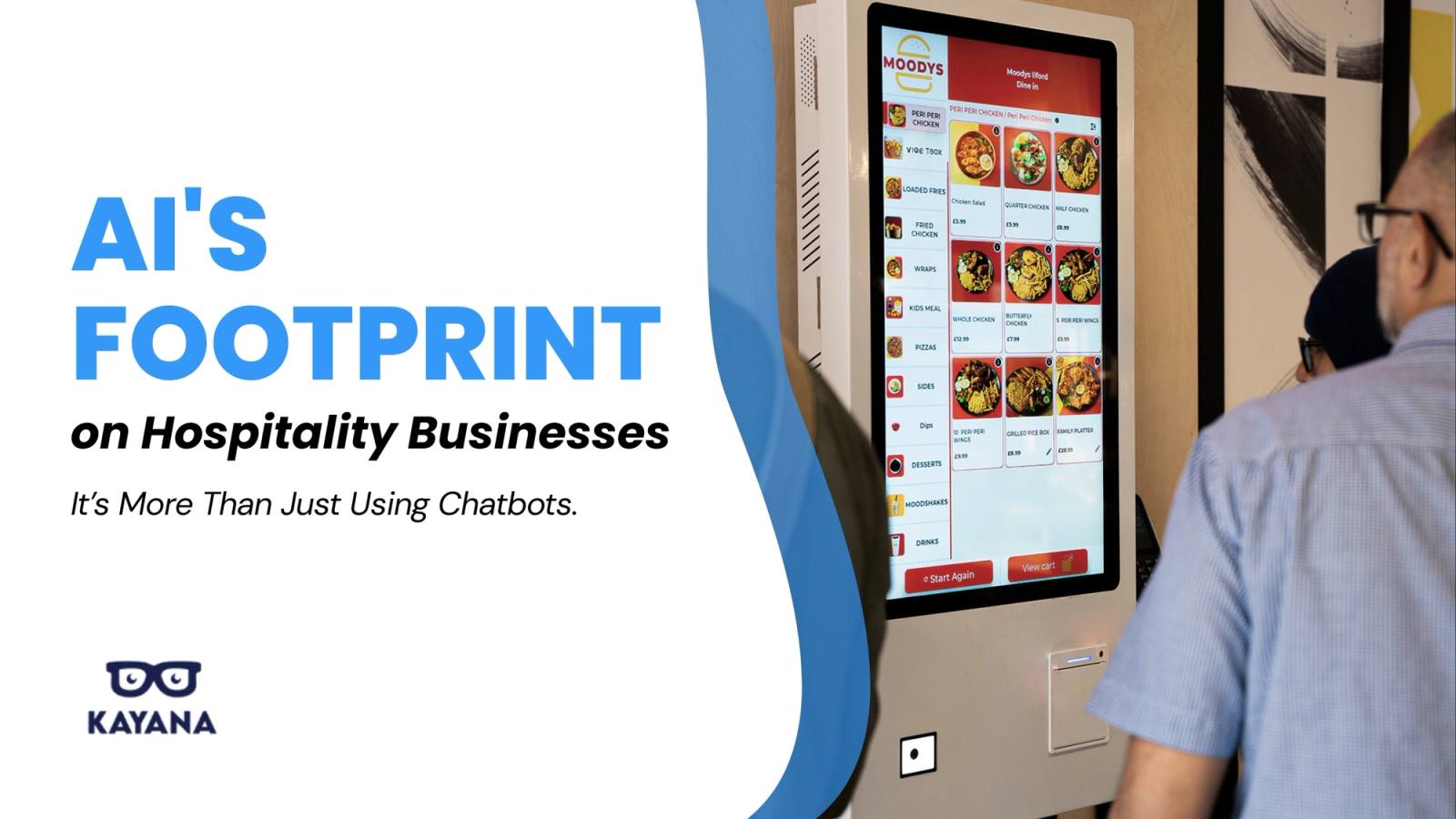
Think of a self service kiosk with an appearance of a AI powered digital assistantwelcoming the guests, “Hello, what do you need help with today?
Through chatbots and virtual concierges, AI now provides 24/7 guest support, They respond to frequent inquiries, respond to bookings and routine requests. Free employees to work on personalized and high value exchanges and accelerated service, increased satisfaction, and made the teams happier..
2. Predictive Analytics: The Data to Decisions
In addition to guest service, AI changes the working perception. Using data from bookings, local events, weather, and social media, predictive analytics can forecast demand, optimise pricing, and adjust inventory in real time.
Hotels, restaurants, and even stadiums are now able to:
- Plan maximum by the hour, be efficient in scheduling.
- Over or understocking is avoided through intelligent forecasting.
- Maximise occupancy rates and profit margins.
The data analytics and integrated EPOS features will provide hotel businesses with an advantage they will transform data into decisions that lead to growth.
3. Automation and Robotics: Making Things Smoother
AI is much more than improving guest interactions, though it is also enhancing back-of-house processes.
Robotic Process Automation (RPA) is a system that requires minimum human input when performing tasks such as procurement, scheduling, and invoicing. Robots with AI clean and take care of rooms reducing the cost of labor without affecting the quality.
The result? Less errors, greater consistency and increased staff time with guests..
4. Hyper-Personalisation: All Guest, VIPs
Artificial intelligence facilitates authentic individualization. Through analyzing the data on the aspects of loyalty, purchase history and online behavior, it selects personalized offers and experiences, like a minibar with a list of snacks that a guest loves to eat or special discounts available to regular visitors.
This form of customization creates brand loyalty, increases expenditure and creates experiences that are not automated.
5. Strategic Investment: AI as a Long-Term Asset
The implementation of AI might appear to be expensive, but the advantages increase with time. Any cost related to labor is reduced with the help of automation, inventory and pricing are optimized with predictive tools, and AI insights contribute to smarter business decisions.
In the case of hospitality brands, it implies that you do not just conduct transactions and move along, but come up with cost effective and memorable guest experience. The use of AI is no longer a choice, it is a strategic necessity in a competitive market.
6. Redefining Roles: Not replacing, but cooperating
One of them: Will AI eliminate jobs?
The reply is “No”; it transforms them.
AI eliminates repetitive activities to leave employees with the ability to focus on creativity, empathy, and problem-solving. AI does not substitute human beings but enables them to provide outstanding services.
Amazon demonstrates that in-depth automation is possible and in simultaneous presence with more than 1.5 million workers across the globe. Hospitality may strive towards such consistency between digital precision and human skill
7. Real-World Insight: Amazon and McKinsey Teachings
The high productivity of Amazon confirms that automation can increase the employment. Its application of robotics and AI has resulted in more output without reduction in jobs.
The McKinsey report of 2022 concluded that 60%. of companies that utilized automation had increased productivity, customer satisfaction and growth of the workforce.
In hospitality, this balance drives efficiency and human connection simultaneously.
8. The Future of Hospitality: Human and AI in Harmony
Hospitality had been human-related. AI does not substitute it, but makes it better. The AI will relieve personnel of all repetitive and data-intensive duties, while real people will be able to offer their clients sincere warmth and loving care, which robots are not able to provide.
At Kayana, we share the view that the best experience by the guests entails a balanced use of technology and humanity. AI makes people smarter, yet faster, more personalized, and more personalized than ever
People Also Ask (PAA)
- What is AI doing to change hospitality?
- Does AI take the place of human employees in hotels and restaurants?
- Why can predictive analytics in hospitality be beneficial?
- What is AI and how does it enhance personalisation of customers?
- Should small hospitality businesses invest in AI?
FAQs
Q1: What is AI doing to the hospitality businesses?
AI optimizes the workflow, increases customer satisfaction, and offers real-time information on better decisions.
Q2: Is AI expensive to adopt?
The start up costs change, and the ultimate benefits on automation and accuracy supersede the set up costs on a long term basis.
Q3: Does AI undermine the number of staff?
No—it redistributes workload. Employees spend a lot of time with the guests discussing and serving them better.
Q4: How can Kayana help?
Kayana presents all-in-one AI-enabled solutions, starting with kiosks and extending to EPOS, that make it easier to manage and become more efficient.
Conclusion: The Smarter Way Forward
AI is not assimilating hospitality it is transforming it. Predictive analytics to personalised experiences AI will power a team, delight guests, and enable profitability. Lesson learned: Hospitality is not about a human world or AI-based one, but about the collaboration between the two, to provide one with the experience that is memorable, efficient, and, indeed, exceptional.