
Why Coffee Shop Owners Are Switching to MPOS (And Not Looking Back)
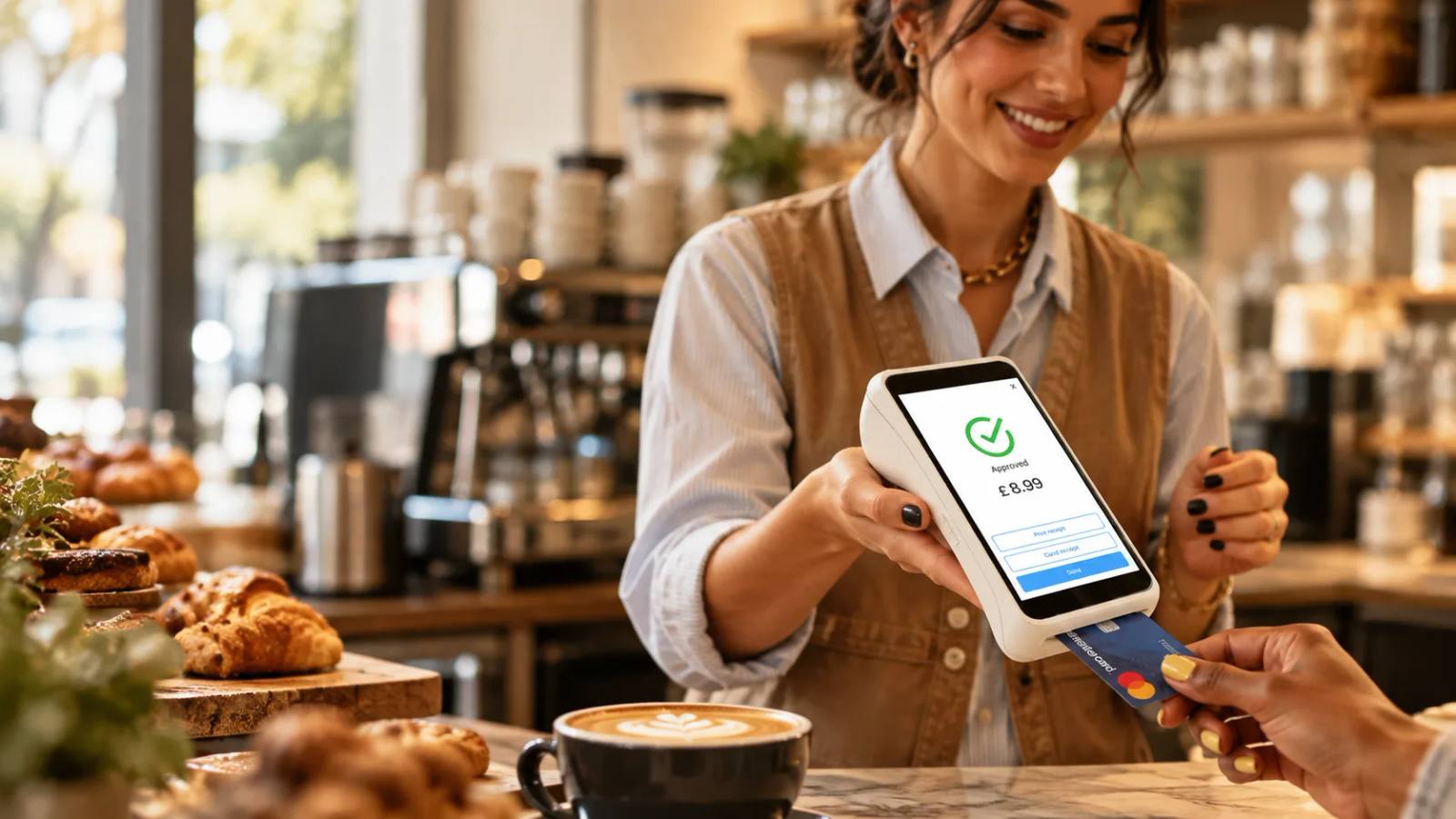
The morning rush is a familiar challenge for coffee shop owners. Customers arrive at the same time, queues build quickly, baristas are trying to keep drinks moving, and the till can become a bottleneck before the first coffee of the day has even left the counter.
That is why more coffee shops are looking beyond a traditional fixed till and considering MPOS (Mobile Point of Sale).
Unlike a conventional POS that keeps staff tied to one checkout point, MPOS allows staff to take orders and payments wherever the customer is. For cafés dealing with busy morning peaks, takeaway orders, queues and limited counter space, that flexibility can make a noticeable difference.
The shift also reflects how customers prefer to pay. UK Finance reports that contactless payments accounted for 67% of credit card transactions and 76% of debit card transactions in June 2026.
For coffee shops, where many transactions are relatively quick and low-value, the ability to take payment without forcing every customer through a fixed till is increasingly relevant.
What is MPOS and how does it work?
MPOS, or Mobile Point of Sale, is a POS system that allows staff to take orders and process payments using a mobile device or handheld terminal.
Instead of having one fixed checkout point, staff can move around the shop and serve customers where it makes sense.
For example, a café employee could:
- Take an order while a customer is waiting in a queue.
- Accept payment without sending the customer back to the till.
- Process takeaway orders outside the main counter area.
- Serve customers at tables.
- Add another payment point during the morning rush.
- Keep queues moving when the main counter becomes busy.
Kayana's MPOS solution is designed around this more flexible approach to point-of-sale.
And MPOS does not necessarily mean replacing everything a coffee shop already has. It can work alongside a fixed EPOS system as part of a wider setup.
1. MPOS helps take the pressure off the counter
A fixed till works well when customer demand is predictable.
Coffee shops rarely have that luxury.
The morning rush can create a sudden increase in orders, with customers arriving within a short window before work, college or appointments. If every customer has to order and pay at exactly the same location, the till can quickly become the constraint.
MPOS creates another option.
A member of staff can move further along the queue and take orders or payments before customers reach the main counter. That means the shop is not relying entirely on one physical checkout point.
Kayana's coffee shop solutions are built around this principle, combining EPOS, MPOS, kiosks, QR ordering and other connected tools to create additional ordering and payment routes.
For a deeper look at the wider challenge, read Why Adding One More Staff Member Doesn't Fix Checkout Delays.
Ready to reduce pressure at the coffee shop counter?
Give your team another way to take orders and payments during busy periods.
Kayana MPOS gives staff the flexibility to take payments away from a fixed till while keeping it connected to the wider point-of-sale setup.
2. Faster payment without sending customers back to the till
For a coffee shop, the payment stage should not become a separate queue.
Customers increasingly expect to tap a card, phone or wearable and continue with their day. UK Finance recorded 1.57 billion contactless card transactions in the UK in June 2026 alone.
MPOS makes it possible to bring the payment point closer to the customer.
Instead of taking an order at one location and then directing the customer somewhere else to pay, staff can handle more of the transaction on the move.
This becomes particularly useful for:
- Busy takeaway periods
- Outdoor queues
- Table service
- Events or pop-ups
- Overflow during peak periods
- Shops with limited counter space
Coffee shop owners looking at payment hardware can also consider a dedicated Card Terminal or Tap to Pay alongside MPOS, depending on how their team serves customers.
3. It gives coffee shops more flexibility during demand spikes
Not every rush looks the same.
One day, the busiest period might be 8–9am. Another day, a nearby event or office opening could create a sudden surge at lunchtime. Seasonal promotions can have the same effect.
A traditional till configuration can make it difficult to respond quickly.
MPOS provides an additional sales channel that can be deployed when and where demand appears.
This is particularly useful for independent cafés that cannot justify permanently adding multiple fixed tills.
Kayana's existing guide on how businesses use MPOS to absorb demand spikes explores this concept in greater detail.
The wider point is simple: capacity does not always have to mean another permanent counter.
4. MPOS can support a more connected coffee shop operation
MPOS is most useful when it is not operating in isolation.
A coffee shop may need its POS to connect with inventory, payments, kitchen or bar workflows, reporting and customer-facing ordering channels.
For example, a typical connected setup could include:
Requirement
Kayana solution
Fixed counter checkout
Mobile ordering and payment
Card payments
Mobile payments
Customer self-ordering
Table or phone ordering
Kitchen/bar workflow
Stock visibility
The benefit of this approach is that the coffee shop can build its technology around the way it actually operates rather than forcing every customer through one ordering route.
For more context, see Do You Need Separate Systems for EPOS, Kiosks, KDS and Payments?.
5. It can make peak periods easier to manage
MPOS is not about making staff work faster for the sake of it.
It is about removing unnecessary movement from the customer journey.
Consider a busy café with one till. A customer queues, reaches the counter, places an order, pays and waits. When ten or twenty customers arrive within a short period, the same process repeats again and again.
Now add a mobile POS into the workflow.
A staff member can begin taking orders further back in the queue. Another can remain at the counter. A third can focus on preparing drinks or food.
The result is a workflow where different parts of the operation can happen simultaneously.
That matters when margins are under pressure. UKHospitality has highlighted the cost pressures facing hospitality businesses, including significant employment costs, while recent UK foodservice data has also shown continued pressure on customer traffic.
Technology therefore has to do more than add another feature. It needs to help operators make better use of the resources they already have.
MPOS is only one part of the modern café setup
The move towards mobile POS does not mean the traditional till has disappeared.
For many coffee shops, the most practical setup is a combination of fixed and mobile technology.
The EPOS remains the central checkout point. MPOS adds mobility. QR ordering can create another ordering channel. Self-service kiosks can provide additional capacity. A KDS can help send orders directly to the preparation area.
This connected approach is particularly relevant for cafés that are growing or operating across multiple locations.
For a broader look at the technology strategy behind cafés, read Build A Winning EPOS Plan Starting With Coffee Shops.
What should coffee shop owners look for in an MPOS system?
Before choosing an MPOS solution, operators should look beyond the hardware itself.
Consider:
Mobility: Can staff genuinely move around the shop and take orders or payments where needed?
Integration: Does the MPOS connect with the rest of the POS and payment ecosystem?
Ease of use: Can new team members learn the system without lengthy training?
Payment flexibility: Can customers pay using the methods they already prefer?
Scalability: Can additional devices or channels be added as the business grows?
Reporting: Can managers still see the information they need across mobile and fixed transactions?
Reliability: Does the system fit the demands of a busy hospitality environment?
These questions matter because an MPOS system should solve an operational problem, not create another one.
Why coffee shops are moving towards MPOS
The case for MPOS comes down to flexibility.
Coffee shops have to manage unpredictable peaks, limited space, fast-moving orders and customers who increasingly expect quick digital payments.
A fixed till can remain an important part of the operation. But adding mobile capability gives staff another way to handle demand.
For some cafés, that could mean taking payments in a queue. For others, it could mean serving tables, handling takeaway demand or creating an additional sales point during the morning rush.
And when MPOS is connected with EPOS, payments, inventory, ordering and kitchen workflows, it becomes part of a wider technology setup rather than another standalone device.
Build a coffee shop setup around the way you actually serve customers
Kayana connects MPOS with EPOS, payments, ordering and operational tools, allowing coffee shops to add the technology they need as they grow.