
Let Your Customers Help Themselves: Self-Service Solutions for UK Labour Shortages
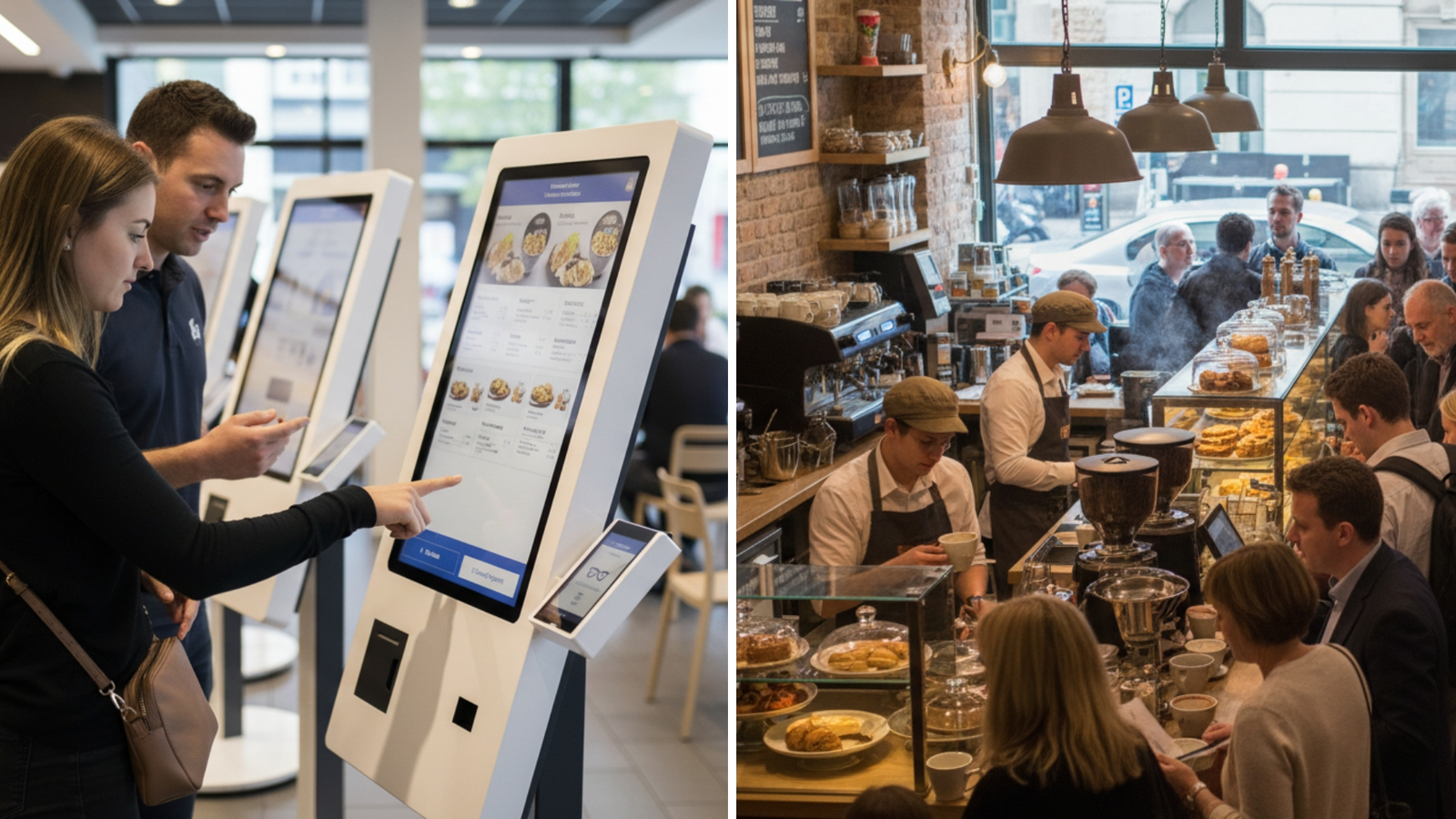
The impact of UK labour Shortages is now being felt in the hospitality sector. Imagine it's 12:47 on a Tuesday afternoon. Your coffee shop on the high street is packed with office workers desperate for their lunch break latte.
You're short two staff members again because one called in sick and the other left last month for a job offering 50p more per hour. The queue snakes out the door. Customers check their watches. Some walk out.
This isn't a nightmare scenario. It's Tuesday.
The UK hospitality sector is haemorrhaging staff at an unprecedented rate. According to UK Hospitality, the industry faces a workforce shortfall of over 174,000 positions as of 2024.
Brexit, the pandemic's aftershocks, and fierce competition for workers have created a perfect storm that's left businesses scrambling.
But whilst you can't clone your best barista or magically make more qualified candidates appear, you can fundamentally rethink how work gets done in your business. The answer isn't working your existing team harder; it's letting your customers help themselves.
The Reality of UK Labour Shortages Challenges
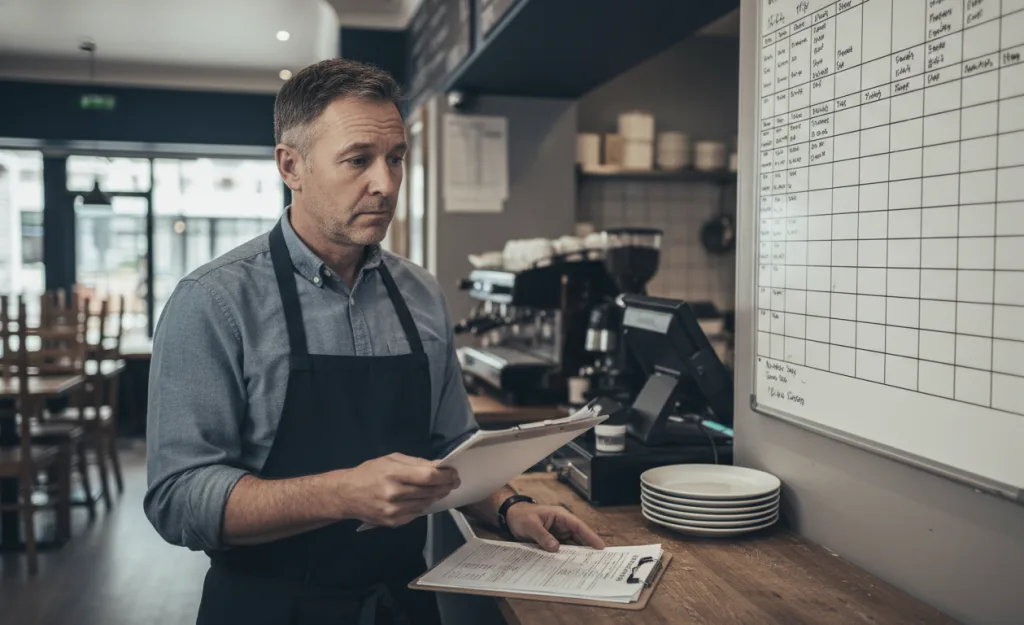
Before exploring solutions, it's worth understanding just how deep this challenge runs.
Small and medium-sized businesses across the UK are caught in a vicious cycle, especially those in the quick-service restaurants and coffee shop sectors. UK Labour shortages lead to longer hours for existing employees, which can cause burnout and ultimately lead to more departures.'
Restaurants can also explore the wider advantages of self-service kiosks and how they can support faster, more efficient service.
Meanwhile, hiring costs have skyrocketed, with recruitment fees, training time, and increased wages driven by the National Living Wage rises all adding up.
The numbers tell a stark story. The British Chambers of Commerce reported in their Q3 2024 survey that 71% of hospitality and leisure businesses identified recruitment as a significant barrier to growth. This isn't just about finding bodies to fill shifts; it's about finding qualified people who'll stay for more than 3 months.
And here's the uncomfortable truth: even when you do find staff, you're paying them to do tasks that customers are increasingly willing, even eager, to do themselves.
What Customers Actually Want
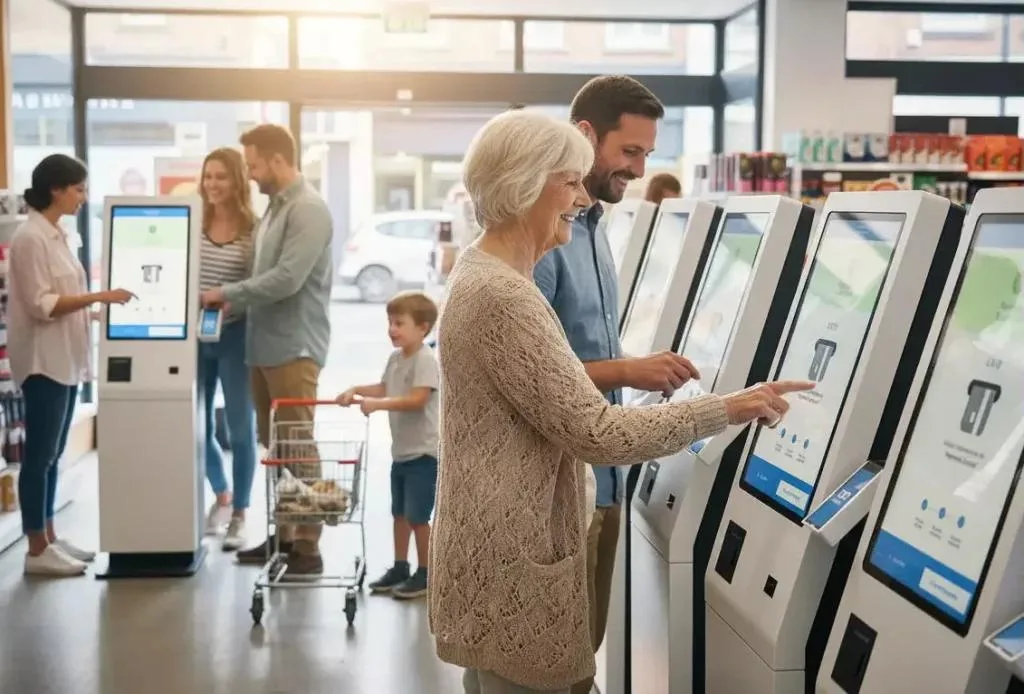
There's a persistent myth that self-service technology alienates customers, particularly in the UK, where personal service has long been valued. The reality? British consumers have already voted with their feet, fingers, and contactless cards.
Think about your own behaviour. When did you last queue at a bank counter when an ATM was available? When did you previously wait for a shop assistant to ring up your groceries when a self-checkout beckoned?
A 2024 study by Retail Economics found that 68% of UK consumers prefer self-service options for routine purchases. The reasons? Speed, convenience, and control. Younger demographics, in particular, the customers who'll sustain your business for decades, expect digital-first experiences.
This isn't about replacing human interaction. It's about reserving your valuable staff time for interactions that actually require human judgment, expertise, or empathy.
How Self-Service Kiosks Can Solve UK Labour Shortages
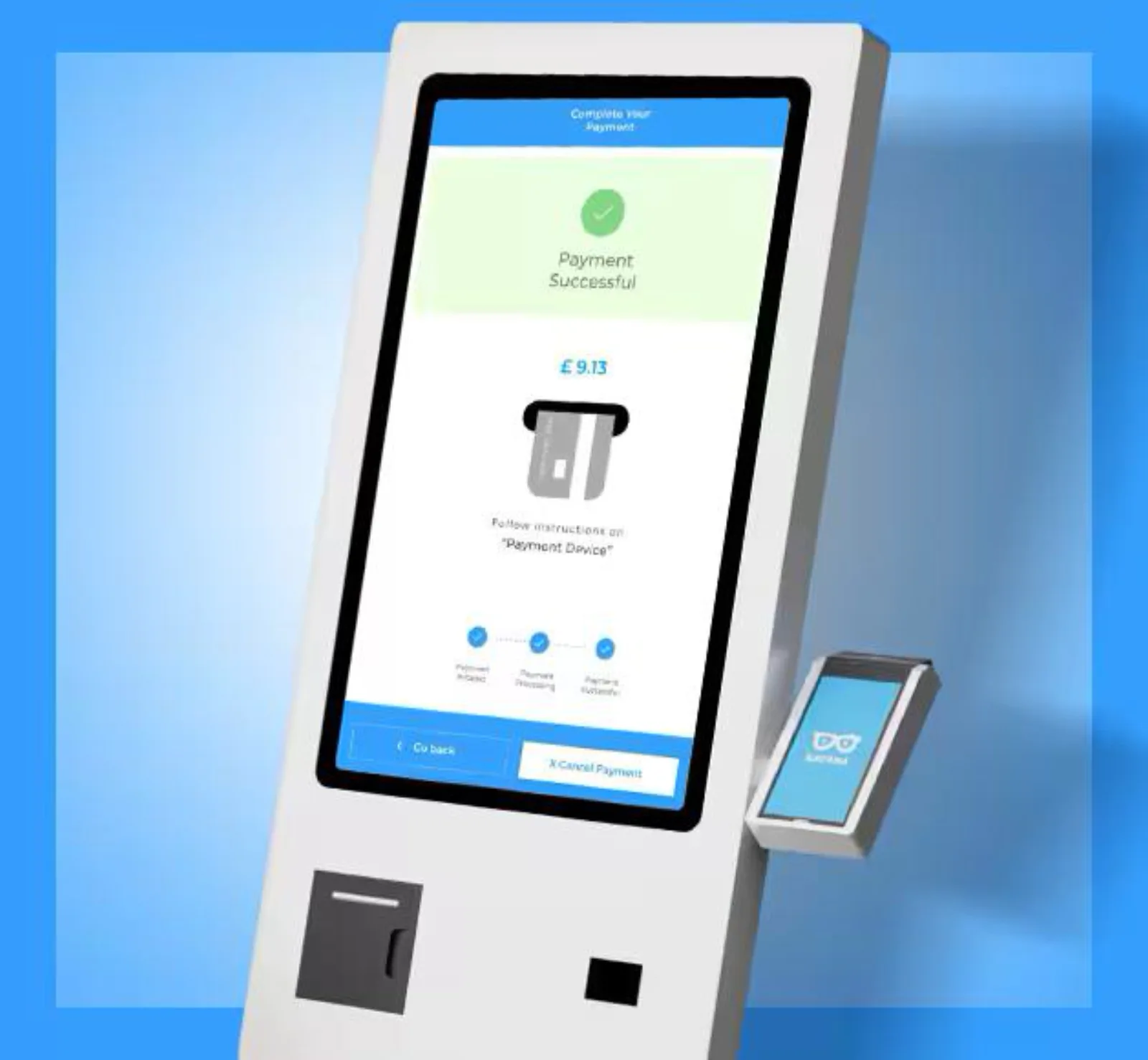
A self-ordering kiosk isn't just a piece of hardware that takes orders; it's a sophisticated system that streamlines the entire ordering process. It's a comprehensive operational shift that addresses labour challenges from multiple angles.
From brick-and-mortar restaurants and physical storefronts to mobile ventures like food trucks, it offers a versatile solution for both commercial transactions and charitable donations.
Immediate Labour Efficiency Gains
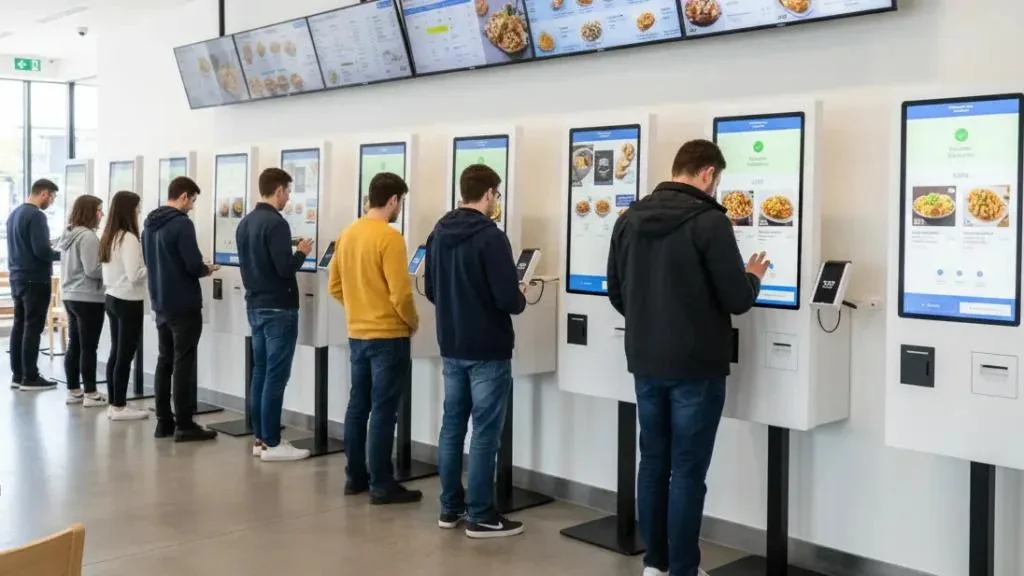
When customers place their own orders through a self-ordering kiosk, they're essentially doing the work of a front-of-house staff member. But they're doing it simultaneously; five kiosks can serve five customers at once, something five cash registers with five staff members would struggle to match during peak periods.
This gain can help alleviate UK Labour Shortages and mitigate the risks currently faced by hospitality businesses.
Consider a typical quick-service restaurant. With traditional till-based ordering, you might need three staff members during lunch rush to handle order-taking, payment processing, and customer queries.
With self-service kiosks, that same volume can often be managed by one staff member who assists customers with kiosk questions and handles exceptions.
That doesn't mean you sack two people. It means those two people can focus on food preparation, maintaining cleanliness, delivering orders to tables, offering innovative ideas, and providing exceptional customer service to people who need assistance.
Consistency During Staff Shortages
Here's a scenario every business owner recognises: your most experienced team member books two weeks in Tenerife. Suddenly, nobody knows how to handle the complex loyalty programme queries or remembers the exact steps for processing refunds.
Self-service technology doesn't call in sick. It doesn't need holiday cover. It doesn't forget procedures or take days off.
When you're running lean, and let's face it, you probably are, consistency becomes invaluable.
A self-service kiosk deployment ensures your service capability remains intact even when key staff are absent. The technology maintains service standards whilst your remaining team handles the genuinely human elements.
Better Deployment of Human Talent
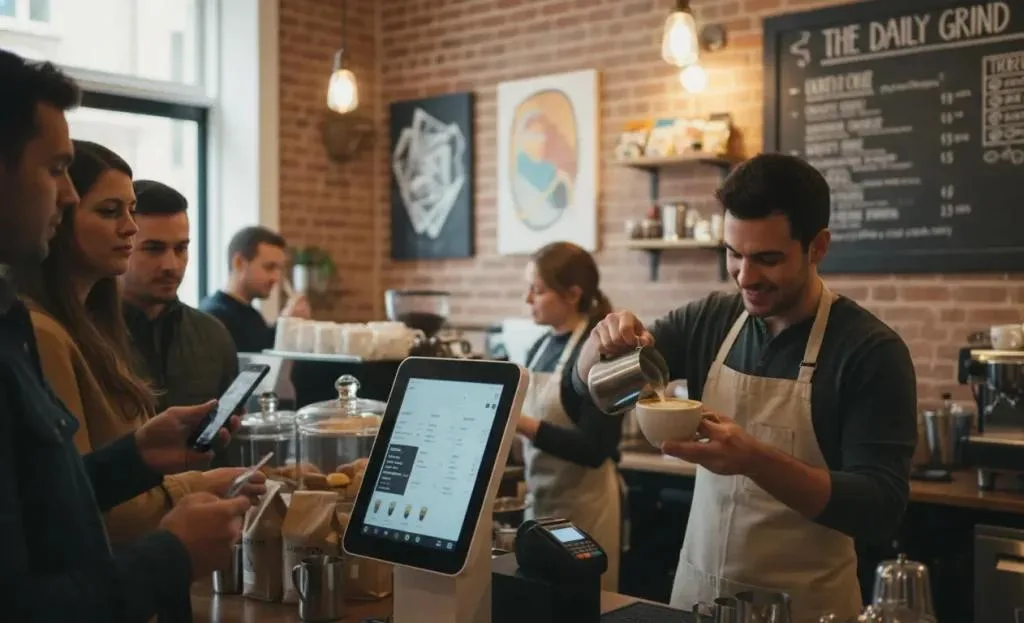
This is perhaps the most overlooked benefit: self-service technology lets you deploy people where they create actual value.
Your best barista shouldn't be stuck at the till keying in orders when they could be crafting perfect flat whites. Your knowledgeable retail assistant shouldn't be processing straightforward transactions when they could be helping customers navigate complex product choices.
When routine transactions migrate to self-service, you can position your team where human expertise, personality, and problem-solving skills genuinely matter.
That's not just operationally smart, it's also better for staff satisfaction. Nobody dreams of a career spent repeatedly asking, "Would you like to make that a meal?"
The Financial Case Beyond Labour Savings

Labour efficiency is the headline benefit, but it's far from the only financial advantage.
Combating UK Labour Shortages with Increased Transaction Values
Multiple studies have demonstrated that customers ordering via self-service kiosks spend, on average, 15-30% more than those ordering with staff. The reasons are psychological and practical.
There's no perceived pressure to hurry when there's a queue behind you. Customers browse at their leisure, exploring menu options they might not have considered. Suggestive selling happens algorithmically: "Would you like to add a pastry?" without feeling pushy because it's the machine asking, not a person.
For a coffee shop serving 200 customers daily, even a 15% increase in average transaction value could mean an additional £50-100 per day, or £18,000-36,000 annually. That's not trivial. Integrate AI for upselling, and you can significantly increase your order values: average baskets can rise by up to 25% through AI-based upselling.
Reduced Training Overheads
Staff turnover in the UK hospitality sector averages around 30% annually, with some businesses experiencing rates above 50%. Every departure incurs recruiting, onboarding, and training costs of £1,000-2,000 per employee, when you factor in reduced productivity during the learning period.
When significant elements of customer interaction shift to self-service, your training requirements become simpler, a crucial advantage amid ongoing UK labour shortages.
New staff don't need to memorise complex till systems or master upselling techniques on day one.
Instead, they can focus on product knowledge, customer service fundamentals, and operational procedures, allowing you to get teams up to speed faster when recruitment is a challenge.
Faster onboarding means new hires become productive sooner, reducing the operational strain that drives more experienced staff to burnout.
Operational Data You've Never Had Before
This benefit often surprises business owners until they experience it firsthand.
Traditional transactions provide basic data: what was sold, when it was sold, and at what price. Self-service systems capture behavioural data: what customers browsed but didn't buy, where they hesitated, which menu layouts performed best, and peak usage times, with granular precision.
This intelligence lets you optimise everything from menu engineering to staffing schedules with unprecedented accuracy. You're not guessing about what drives revenue, you're seeing it in real-time data.
Ready to solve your staffing challenges?
Speak with our team about self-service solutions tailored to your business.
Book a free consultation today!
Real-World Applications Across UK Industries
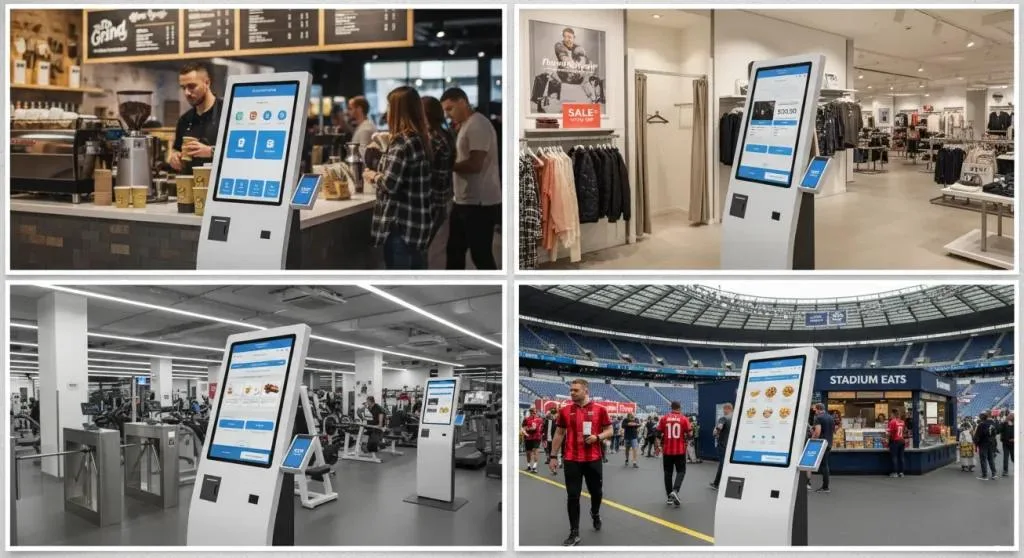
Self-service solutions aren't one-size-fits-all, and different sectors have discovered different applications that address their specific labour challenges.
Coffee Shops and Quick-Service Restaurants
The morning rush is brutal. Between 7:30 and 9:00 AM, you need to serve three times as many customers as you would in any other 90-minute window. Traditionally, that meant overstaffing for 90 minutes and underutilising those staff for the rest of the day.
Self-ordering kiosks let you handle peak demand without the need for proportional staff increases. Customers who know exactly what they want, your regulars order their standard flat white at zip-through kiosks, whilst staff focus on complex orders and food preparation.
Several London-based coffee chains have reported serving 40-50% more customers during peak periods without additional front-of-house staff after implementing self-service solutions.
Retail Environments
High street retail faces its own labour crisis, compounded by thin margins that make every pound of wage cost significant.
Self-service kiosks in retail serve multiple functions: product information lookups, price checks, loyalty programme management, and checkout. This frees retail assistants to focus on advice, styling, complex queries, and loss prevention tasks that genuinely require human attention.
Fashion retailers in particular have found success with this model, positioning staff as style consultants rather than transaction processors.
Gyms and Leisure Facilities
Membership-based businesses face a peculiar challenge: they need staff coverage during peak times (6:00-9:00 AM and 5:00-9:00 PM) but must remain accessible outside those hours.
Self-service check-in kiosks enable 24-hour access to the facility without 24-hour reception staffing. Members scan in, purchase day passes, or add services like personal training sessions, all without staff intervention.
This dramatically reduces labour costs whilst improving member convenience, a combination that's hard to beat.
Stadiums and Event Venues
Venue operations face extreme staffing challenges: massive demand during events, zero demand otherwise. Hiring and training temporary staff for sporadic events is expensive and unreliable.
Self-service food and beverage ordering has transformed venue operations. Fans order and pay via kiosks, then collect from streamlined fulfilment stations. Labour requirements drop by 40-60% whilst service speed increases, meaning fans spend less time queuing and more time enjoying the event.
Addressing Common Concerns
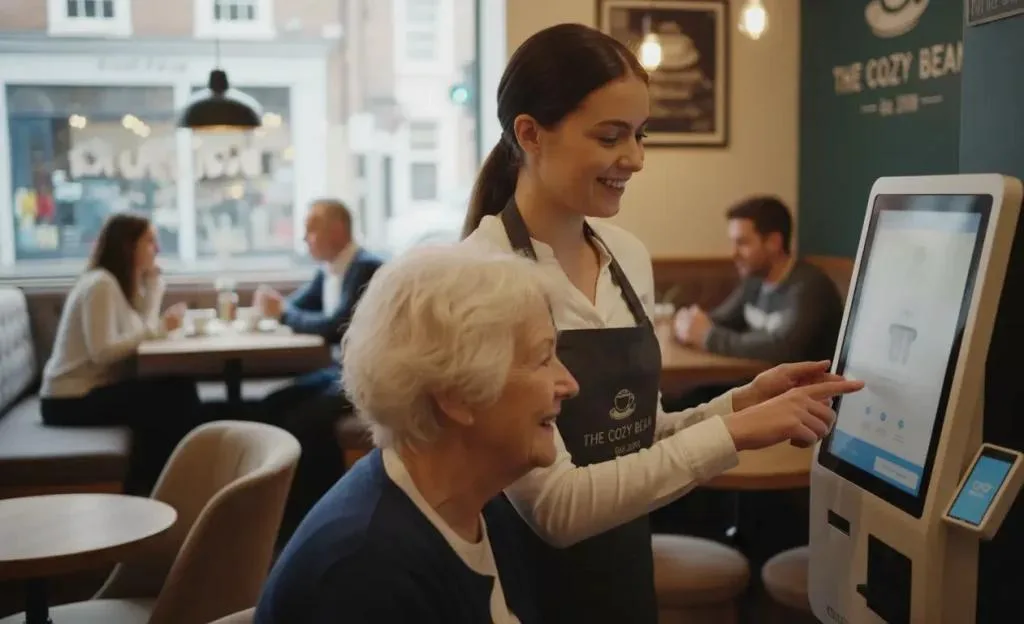
Despite clear benefits, business owners often hesitate. Let's address the usual concerns directly.
"My customers are older and won't use technology."
Age-related technology resistance is vastly overstated. The same customers who supposedly can't use kiosks somehow manage online banking, smartphone apps, and contactless payments.
The key is intuitive design and visible staff support. When customers know help is available if needed, adoption rates soar across all demographics. Most businesses see 70-80%+ adoption within weeks, including older customer segments.
"It'll feel impersonal and damage our brand."
This assumes your brand is currently built on till-based transactions, which seems unlikely. Your brand is built on product quality, ambience, and how you treat customers when they need assistance.
Self-service actually enables better personal service by freeing staff to have genuine interactions rather than transactional exchanges. When staff aren't chained to tills, they can circulate, assist, chat, and build relationships.
"The upfront cost is too high for a small business."
Self-service kiosk solutions come in various configurations and price points. Entry-level systems start at a few thousand pounds, while enterprise solutions cost more.
The relevant question isn't the absolute cost, it's the payback period. When a system saves you 20-30 hours of labour per week, the maths becomes compelling quickly.
Many businesses achieve a positive ROI within 6-12 months, after which it's primarily driven by pure operational efficiency gains.
"What about accessibility requirements?"
Modern self-service systems are designed with accessibility in mind, meeting requirements under the Equality Act 2010. Features include adjustable heights, audio assistance, high-contrast displays, and multiple language options.
Crucially, accessibility doesn't mean every customer must use self-service. It means those who can and want to use it have that option, whilst staff remain available for those who need assistance.
Implementation: Getting It Right
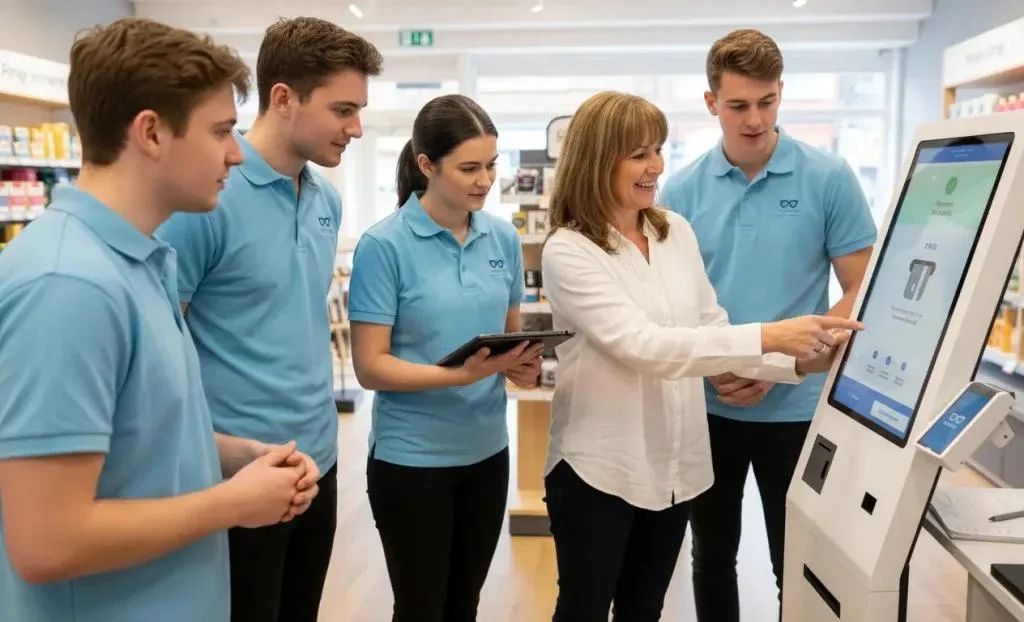
Technology alone doesn't solve labour challenges. Successful implementation requires thought, planning, and ironically good people management.
Staff Buy-In Is Non-Negotiable
Your team might see self-service technology as a threat. Address this directly and honestly.
Frame it accurately: this technology doesn't replace people; it eliminates tedious tasks so people can do more interesting, valuable work. Involve staff in the implementation process. Seek their input on placement, workflows, and customer communication.
When staff understand they're being elevated, not replaced, adoption becomes a collaborative process rather than a combative one.
Customer Communication Matters
Don't just install kiosks and hope customers figure it out.
Use clear signage to explain the choice: "Order here for faster service" or "Speak to our team for assistance." Position staff nearby during the first few weeks to guide adoption. Communicate the benefits explicitly: "Skip the queue order at the kiosk."
Most customers will embrace self-service within days. A small minority won't, and that's fine. The goal is options, not mandates.
Solve staffing and service challenges with smart self-service solutions.
Speak with our team about self-service solutions tailored to your business.
Book a free consultation today!
Integration With Existing Systems
Your self-service solution must communicate seamlessly with your EPOS system, kitchen display systems, inventory management, and loyalty programmes.
Fragmented systems create operational nightmares, including orders that fail to reach the kitchen, loyalty points that are not applied, and inventory that fails to update.
Before introducing self-service technology, it is also worth considering whether you need separate systems for EPOS, kiosks, KDS and payments.
Ensure your solution integrates comprehensively, not just theoretically.
Kayana's self-service kiosk solutions are built with integration as a core feature, connecting seamlessly with existing order processing infrastructure to ensure smooth operations from day one.
Ongoing Optimisation
Implementation isn't a one-and-done event. Monitor adoption rates, transaction times, error rates, and customer feedback continuously.
Which menu items get browsed but not purchased? Where do customers get confused? What time of day sees the highest kiosk usage versus traditional ordering? Use this data to refine menu layouts, simplify workflows, and adjust staffing accordingly.
The Broader Shift: Empowering Customers
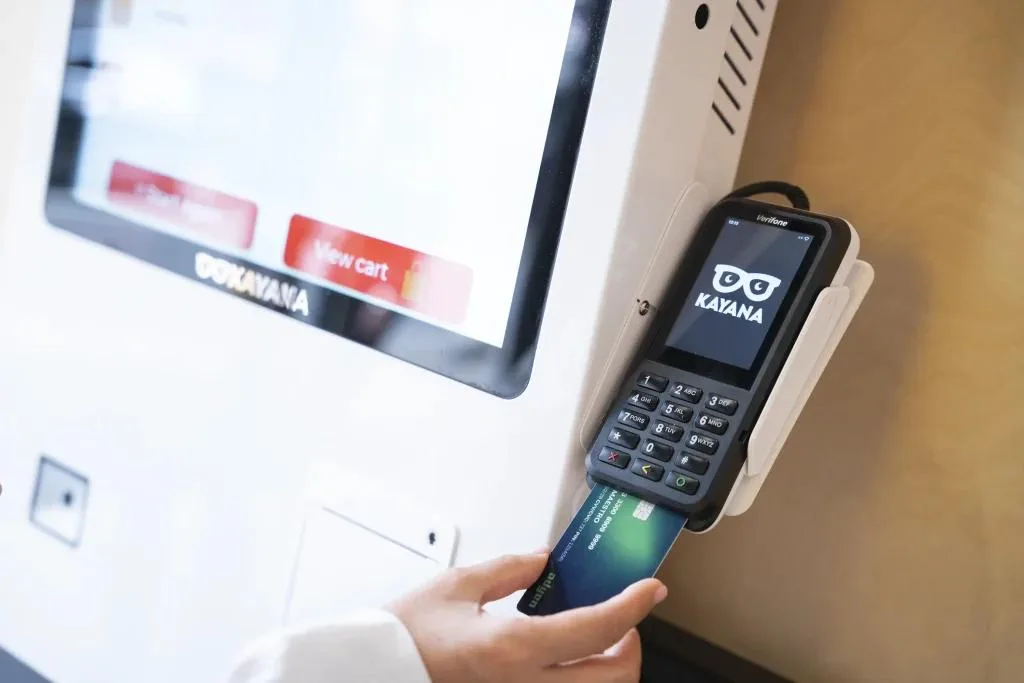
Self-service technology represents something larger than operational efficiency; it's a fundamental shift in how businesses and customers interact.
Today's customers expect agency. They want control over their experience, the ability to browse without pressure, and the option to transact at their own pace. Self-service delivers all of this whilst simultaneously addressing your labour challenges.
This isn't about reducing human interaction. It's about making human interaction meaningful rather than transactional.
When customers handle routine tasks themselves, your team can focus on the moments that actually matter: solving problems, providing expertise, creating memorable experiences, and building relationships.
That's not a dystopian future of robot overlords, it's a return to what customer service should have been all along.
Looking Forward: Adaptation or Obsolescence
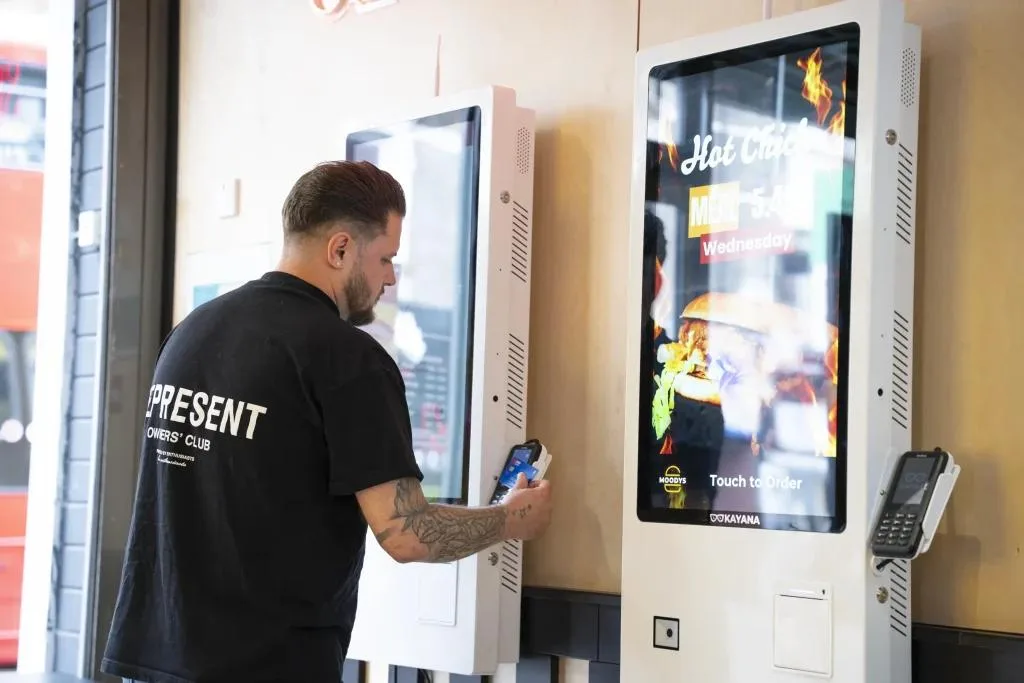
The UK labour shortage isn't temporary. Demographic trends, changing work expectations, and economic pressures suggest staffing challenges will intensify, not ease.
Businesses that continue operating with pre-2020 labour models will find themselves increasingly uncompetitive. They'll pay more for staff, struggle with recruitment, suffer from service inconsistency, and watch customers drift to competitors who've embraced operational efficiency.
Meanwhile, businesses that thoughtfully integrate self-service solutions will serve more customers with leaner teams, redeploy human talent to high-value activities, and build operational resilience that withstands staffing disruptions.
The question isn't whether to adapt... It's whether to adapt proactively or reactively.
Take Control of Your Labour Challenges
Staff shortages won't solve themselves. The businesses thriving despite recruitment challenges aren't waiting for the labour market to improve; they're fundamentally rethinking how work gets done.
Reducing queues is another potential benefit, as explored in how self-service kiosks reduce waiting times in restaurants.
Self-service kiosks aren't about replacing your team; they're about augmenting it. They're about multiplying your team's effectiveness, protecting your business from operational disruptions, and providing customers with the fast, convenient experience they increasingly expect.
Discover how Kayana's self-service solutions can transform your operation whilst addressing the labour challenges keeping you awake at 2:00 AM. Because you can't hire your way out of a nationwide staffing crisis, but you can innovate your way through it.
Ready to reduce staffing pressure?
Speak to our team about self-service solutions built for your business.
Book a free consultation today!