
How to Get Paid Faster: Modern Invoicing and Payment Solutions for UK Small Businesses
Modern invoicing for UK small businesses has come a long way from printing a PDF, emailing it across, and hoping for the best. Yet somehow, the waiting hasn't changed much.
You've delivered the work, sent the invoice, and now you're watching your bank account like a hawk. The client has gone quiet. You send a polite follow-up. Nothing. You send another one, slightly less polite. A read receipt. Still nothing.
Sound familiar? You're not alone. And honestly, the problem is bigger than most people realise.
The Real Cost of Waiting to Get Paid (And Why Modern Invoicing for UK Businesses Matters)

Late payments aren't just irritating. For many small businesses across the UK, they're genuinely dangerous.
Between June 2023 and June 2024, nearly 49.3% of invoices sent by small businesses were paid late, up from 43% the previous year. That's not a blip. That's a pattern.
And the numbers behind it are sobering. On average, the total value of outstanding late payments to small businesses is £96,772, a 41% increase from the end of 2023. Over 3.6 million (72%) SMEs have some form of outstanding late payment from customers. (Source: Aldermore SME Growth Index)
SMEs are likely to wait an extra 46 days for a late payment to be settled, and spend 13 hours of company time chasing outstanding amounts. That's nearly two working days, every single month, just chasing what you're already owed.
The knock-on effects are real:
- 38% of businesses struggle to pay essential business costs as a result of cash flow issues
- 31% face delays in making key investments
- 30% miss out on opportunities for business growth
Strong cash-flow management is also a key part of making smarter business investments. Read more about how to grow your business with smart investment.
The cost of late payments to UK small businesses reached an estimated £1.6 billion in 2023, more than double the 2021 figure. (Source: Xero Small Business Insights)
Here's the thing, though: modern invoicing for UK small businesses isn't just about digital PDFs. It's about creating systems that make paying you the path of least resistance.
The good news? A lot of this is preventable. The businesses that get paid fastest aren't necessarily the ones with the best contracts or the most aggressive follow-up processes.
They're the ones who've made paying them as easy as possible, from the very first interaction.
Here's how to do the same.
Tip 1: Modern Invoicing Needs Immediate Action (Don't Wait Until Month-End)
Most people don't pay late because they're trying to cause problems. They pay late because there was no built-in urgency from the start.
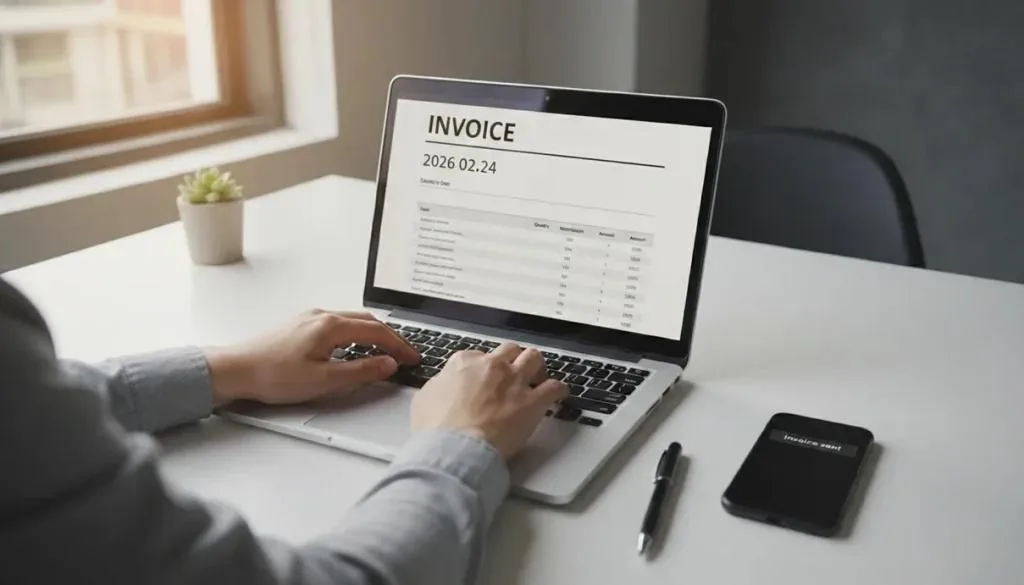
If your invoice says "30 days," your client will pay in 30 days. Or 35. Or 42. But if you switch to 14-day payment terms and state them clearly upfront, you'll typically see money arrive sooner, not because clients suddenly became more reliable, but because the deadline feels real.
What to define at the outset:
| Element | Example |
|---|---|
| Payment due date | 14 days from invoice date |
| Accepted methods | Card, bank transfer, Pay by Link |
| Late payment fees | 8% above Bank of England base rate (legally permitted under the Late Payment of Commercial Debts Act 1998) |
| Preferred contact for queries | A named person, not a generic inbox |
The point is to remove all ambiguity. The more vague your terms are, the more room there is for delay.
Managing customer accounts, billing history, and agreed terms across multiple clients can get messy fast, especially when you're doing it in spreadsheets and email chains.
Modern invoicing software lets you keep customer data, transaction history, and payment preferences in one place, so nothing falls through the cracks and every interaction is consistent.
Tip 2: Offer Multiple Payment Methods (And Make Them Obvious)
If a client has to ask how to pay you, you've already lost time.
Key advice:
- Accept card payments, bank transfers, direct debit, and digital wallets
- Display all accepted methods clearly on the invoice itself
- Include clickable payment links directly in the email or PDF
- For B2B clients, offer BACS or Faster Payments details upfront
Why this works: The data is clear: 94.6% of UK card payments under £100 are now contactless. People want to tap, click, or scan. not log in to their banking app and manually type account numbers. The fewer steps between "invoice received" and "payment sent," the faster money arrives. (Source: Barclays Consumer Spend Contactless Report)
Tip 3: Send Automated Payment Reminders (Before AND After the Due Date)
Most late payments aren't intentional. People forget. Inboxes get buried. Life happens.
Key advice:
- Send a friendly reminder 3-5 days before the due date
- Send a polite follow-up on the day payment is due
- Send a firmer reminder 7 days after the due date with late fee information
- Automate this process so you're not manually chasing
Tone matters:
- Before due date: "Just a friendly reminder that invoice #1234 is due on . Let me know if you need anything."
- On due date: "Invoice #1234 is due today. You can pay instantly using the link below."
- After due date: "Invoice #1234 is now days overdue. As per our terms, a late payment fee of applies after 14 days."
Most invoicing platforms let you schedule these reminders automatically. You set them once, and the system handles the rest. No awkward phone calls. No manual tracking.
Tip 4: Incentivise Early Payment (And Penalise Late Payment)
Want to get paid faster? Make it worth their while. Or make it costly not to.
Early payment discounts:
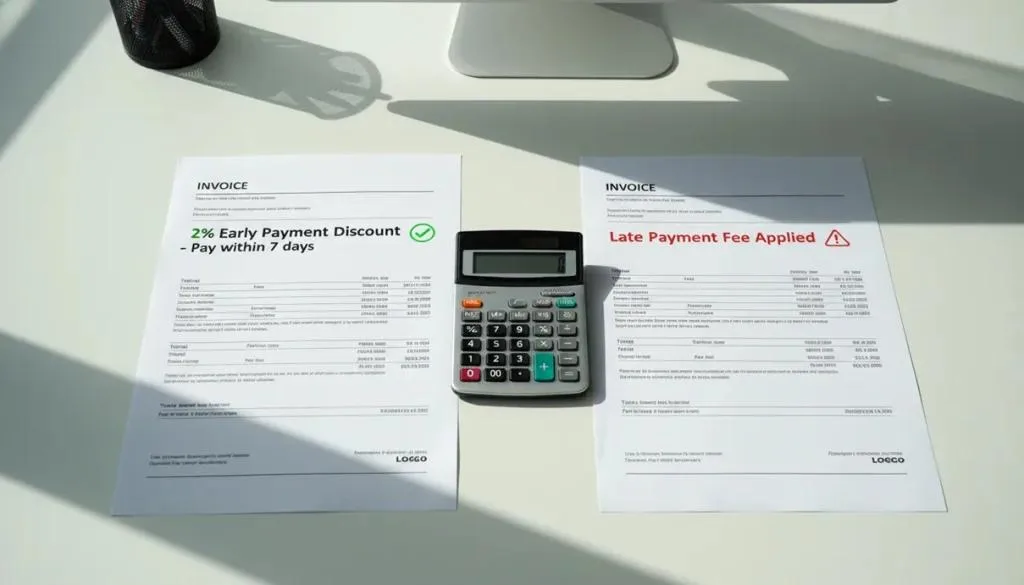
- Offer 2-5% off for payment within 7 days
- Clearly state this on the invoice: "Pay within 7 days and save 3%"
- Surprisingly effective for B2B clients with slow accounts payable processes
Late payment penalties:
- Under the Late Payment of Commercial Debts (Interest) Act 1998, you're legally entitled to charge interest on late payments
- Current rate: 8% above the Bank of England base rate
- Also entitled to fixed compensation: £40 for debts under £1,000, £70 for £1,000-£9,999, £100 for £10,000+
- State this clearly in your terms and on the invoice
Why it works: Discounts create urgency. Penalties create accountability. Both shift the behaviour you want.
Tip 5: Build a Credit Control Process (Not Just a Payment Process)

If you only think about payments when an invoice goes unpaid, you're already too late.
Before you work with a client:
- Run a credit check for new clients
- Ask for references if the contract is significant
- Agree on payment terms in writing before any work starts
During the relationship:
- Track which clients consistently pay late
- Adjust terms for repeat offenders (e.g., payment upfront, shorter windows, deposits)
- Flag clients who ignore reminders for closer monitoring
After repeated late payments:
- Consider whether the relationship is worth maintaining
- Invoice problem clients more frequently (weekly, not monthly)
- Require upfront payment or deposits for future work
Modern invoicing for UK businesses includes the data to spot patterns early: If three invoices in a row from the same client are paid 20+ days late, that's not bad luck, that's their payment culture. Adjust accordingly.
Streamlining repetitive processes is another way businesses can invest in sustainable growth, as explored in these smart investment strategies for growing businesses.
Putting Modern Invoicing for UK Small Businesses Into Practice
Getting paid faster isn't about being pushy or chasing people down. It's about removing every possible reason for delay before the invoice even lands.
| Challenge | Solution |
|---|---|
| Invoices sent too late | Invoice immediately, automate where possible |
| Clients don't know how to pay | Offer multiple methods, include clickable links |
| Invoices forgotten or ignored | Automate reminders before and after due date |
| No urgency to pay on time | Incentivise early payment, penalise late payment |
| Repeat late payers drain cash flow | Build a credit control process, adjust terms for problem clients |
The pattern is consistent across all the tips above: the clearer your process and the easier it is to pay, the faster the money arrives. That's not a hunch, it's what the data shows, and it's what businesses across hospitality, retail, and services are discovering every day.
Ready to Stop Chasing and Start Growing?

If late payments are a regular feature of your business, it's worth having a proper look at your payment stack, not just your invoicing habits.
Kayana builds ordering and payment solutions specifically for UK businesses that want to collect payments faster, manage cash flow more confidently, and spend less time on admin.
Speak to an expert at Kayana or explore the full range of ordering and payment solutions to find out how to boost your average order value and put more time back in your day.