
How to Choose the Right EPOS System for Your Restaurant in 2026
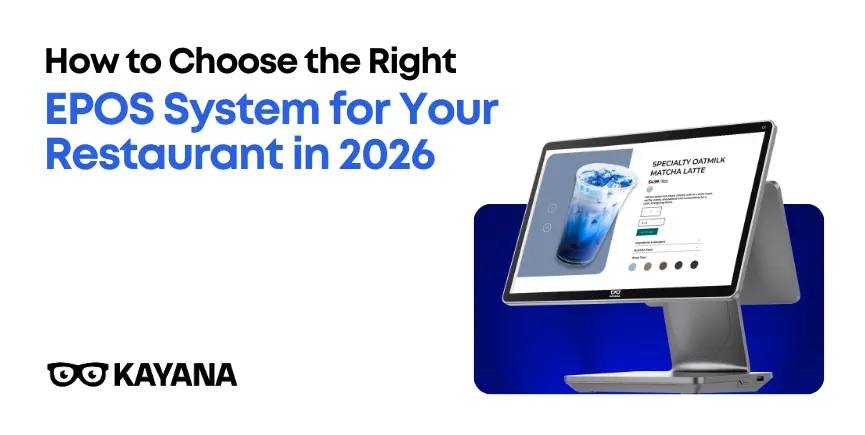
Picture this. It's a Friday night. Every table is occupied, the kitchen is at full tilt, and your till freezes mid-transaction. Your staff are trying to hold it together while a queue builds at the counter. The fix takes 15 minutes. But the damage to service, mood, and customer trust? That lingers a lot longer.
Most restaurant owners who've been through something like this say the same thing afterwards: they'd picked the wrong system. Not because it was cheap or complicated, but because it simply wasn't built for the way their restaurant actually runs.
To choose the right EPOS system for your restaurant in 2026, it isn't about finding the most feature-packed option. It's about finding the right one for you. This guide breaks down exactly how to do that.
First, let's be honest about what an EPOS actually is
EPOS stands for Electronic Point of Sale. But that description barely scratches the surface of what a well-integrated system does in a modern restaurant.
It's not just a till. It's the connective tissue between your front-of-house team, your kitchen, your payment processing, your stock levels, and your business reporting.
When it works well, you barely notice it. When it doesn't, you notice it constantly.
Why do so many restaurants pick the wrong system

There's a pattern here that's worth naming. A lot of operators make the decision based on price or a slick sales demo. They buy something that looks the part, works fine in a quiet Tuesday lunchtime, then struggles badly on a packed Saturday evening.
Others choose a system that's genuinely good, just not for their type of venue. A system built for retail doesn't handle table management, modifiers, or kitchen routing in the way a restaurant needs. (What EPOS, 2026) And a system designed for fine dining may be overkill, and frankly confusing, for a quick-service counter.
The biggest mistake is treating an EPOS purchase like buying a printer. It's not a peripheral. It's the operating system of your restaurant.
5 things that actually matter when you choose the right EPOS
Cut through the marketing noise and focus on these.
1. Does it match your service model?

Quick-service, full-table-service, and hybrid formats all have different demands. Full-service venues need open orders linked to a floor plan, bill splitting by cover, and course timing.
Quick-service restaurants need speed above all else: fast input, instant kitchen routing, and frictionless counter payment. Know which one you are before you start comparing systems.
2. How well does it integrate?
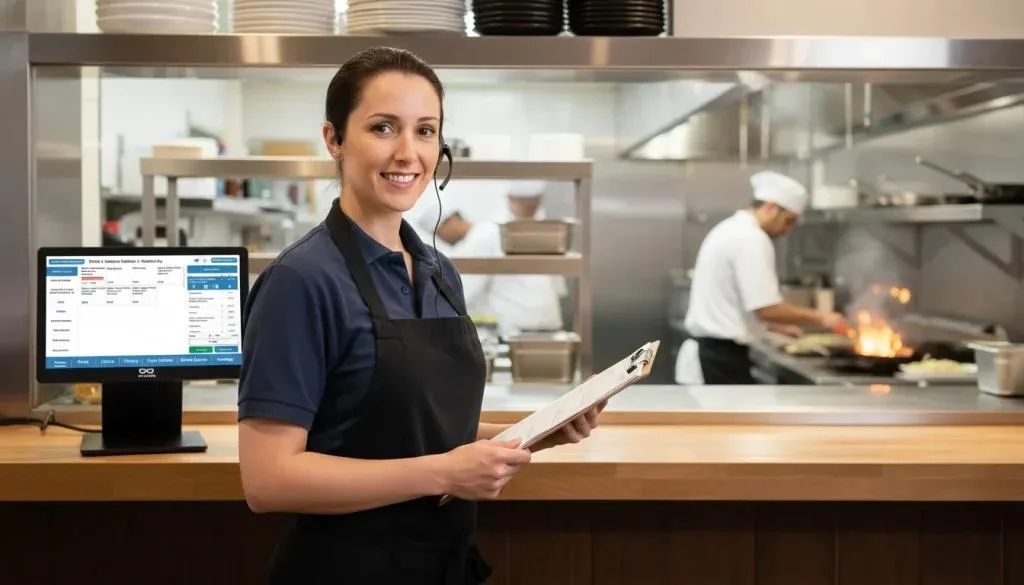
Your EPOS shouldn't be an island. It needs to connect with your Kitchen Display System, your payment terminals, your delivery platforms (Deliveroo, Uber Eats), and ideally your accounting software.
If your system doesn't sync with the tools you already use, you'll end up manually re-entering data somewhere. That's time, money, and an invitation for errors. (What EPOS, 2026)
3. What happens when something goes wrong?
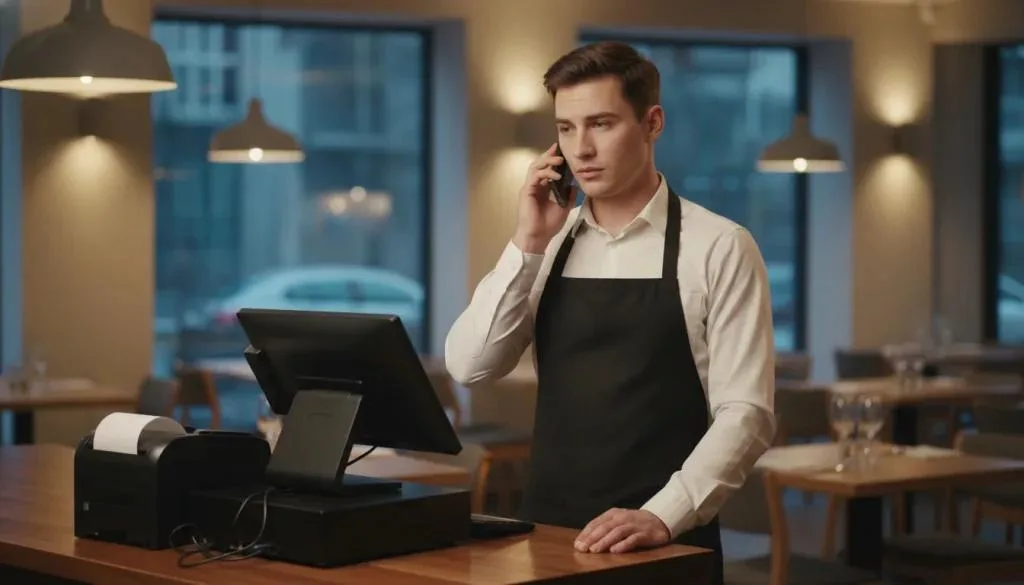
Technical issues don't happen at convenient times. They happen at 8 pm on a Friday when you have a full house. Check whether your provider offers phone support, not just email.
Find out if the system works offline during a network outage. Ask what the average response time is for urgent issues. This is one of the most important questions you can ask, and most people forget to ask it. (What EPOS, 2026)
4. Can your staff actually use it quickly?
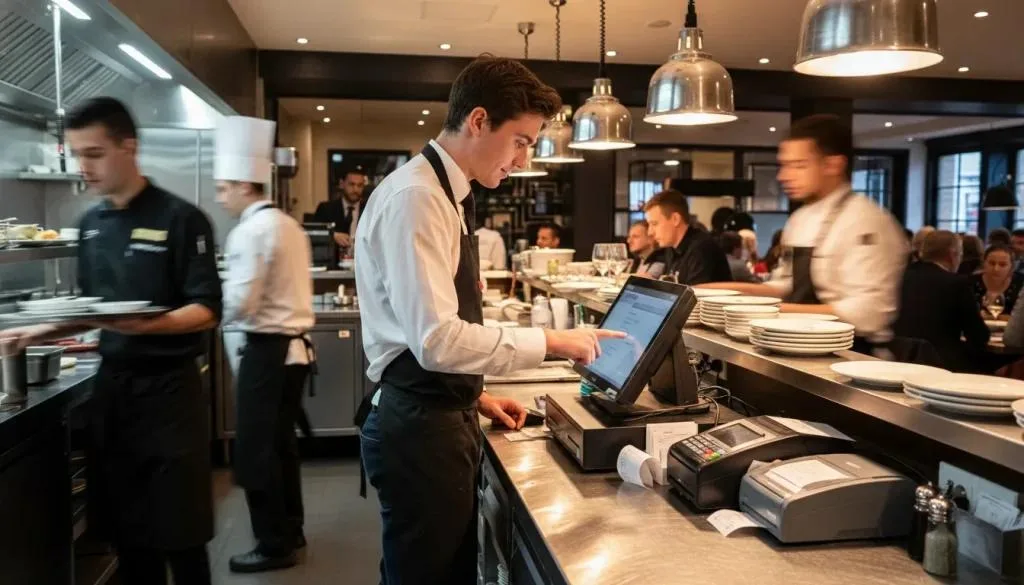
A system your team can pick up in 20 minutes is worth far more than a feature-rich one that requires a two-day training course. High turnover is a reality in hospitality.
Your EPOS interface needs to be clear, fast, and forgiving of mistakes. If the demo takes 40 minutes to explain the basics, that's a warning sign.
5. Is it built to grow with you?

Running one site today doesn't mean you'll always run one site. If you expand, you don't want to rip out your entire tech stack and start again.
Choose a system that can accommodate additional locations, additional users, and additional integrations without a painful migration. (What EPOS, 2026)
Your EPOS should also work effectively alongside other restaurant technology. Find out whether you need separate systems for EPOS, kiosks, KDS and payments.
The features you genuinely can't skip when you choose the right EPOS
| Feature | Why it matters | Who needs it |
|---|---|---|
| Kitchen Display System (KDS) integration | Orders go directly to the kitchen the moment payment or confirmation is made. No paper tickets, no miscommunication. | All restaurant types |
| Real-time inventory tracking | Flags low stock before service, updates automatically as items sell. Reduces waste and avoids menu errors mid-shift. | All restaurant types |
| Table and floor management | Assign orders to tables, manage courses, and split bills by cover or item without losing track mid-service. | Full-service restaurants |
| Multi-payment support | Card, contactless, mobile wallets. Customers expect flexibility. A system that only handles one or two payment methods creates friction at the worst moments. | All restaurant types |
| Reporting and analytics | Know which dishes are your real earners, which shifts drive the most revenue, and where your food costs are creeping up. This data is already in your system. Use it. (Harrison Carloss, 2025) | All restaurant types |
| Offline mode | If the internet drops, service shouldn't. A system that bricks itself during a network outage is a liability. | All restaurant types |
| Allergen and modifier management | Food businesses are legally required to communicate allergen information clearly at the point of order. (NPI, 2026) Your EPOS needs to support this without manual workarounds. | All restaurant types |
Beyond features and pricing, there are several practical factors to consider. Here are 5 important questions to ask before choosing an EPOS system.
Understanding the real cost of choosing the right EPOS
There's the price on the quote, and then there's the actual cost over three years. They're often very different numbers.
Payment processing fees alone typically run between 1% and 3% per transaction.
In a busy restaurant turning over £20,000 a month in card payments, that difference in processing rate is worth thousands annually.
Add monthly software fees, hardware costs, and support contracts, and the true cost of a "cheap" system can end up higher than a well-specified one.
✓ Ask for the total cost of ownership over 24 to 36 months, not just the upfront price
✓ Confirm payment processing fees for card, contactless, and online orders separately
✓ Find out if hardware is proprietary (expensive replacements) or compatible with standard equipment
✓ Check whether the monthly fee increases as you add terminals or locations
✓ Ask what support is included and what costs extra
Restaurants looking to modernise their operations may also want to consider self-service ordering. Explore the advantages of self-service kiosks for restaurants.
Making Tax Digital: a compliance point worth knowing
HMRC's Making Tax Digital initiative requires VAT-registered businesses to keep accurate digital records and submit returns digitally.
When you choose the right EPOS, the EPOS system will handle this automatically, with no extra admin on your part.
If you're evaluating options, confirm that the system you're considering supports MTD compliance. It's one of those things that's easy to overlook during the buying process and very annoying to discover later.
A quick checklist before you decide
✓ Have I defined my service model clearly (QSR, table service, hybrid)?
✓ Have I listed the integrations I can't do without?
✓ Have I tested the interface myself, not just watched a demo?
✓ Have I asked about offline functionality and support response times?
✓ Have I calculated the total cost over three years, not just the quote?
✓ Have I confirmed allergen management and MTD compatibility?
✓ Can this system grow if I open a second site?
The bottom line

There's no single best EPOS system for restaurants. There's only the right one for your operation, your team, and where you want the business to go. The operators who get this right tend to spend more time asking questions than looking at feature lists.
The ones who get it wrong usually regret it quickly and quietly, typically on a busy weekend when everything they should have tested is suddenly very apparent.
Take the time to get this decision right. Your front-of-house team, your kitchen, and your customers will thank you for it.