
Surviving London's Business Rates: How Technology Reduces Operating Costs for Retailers
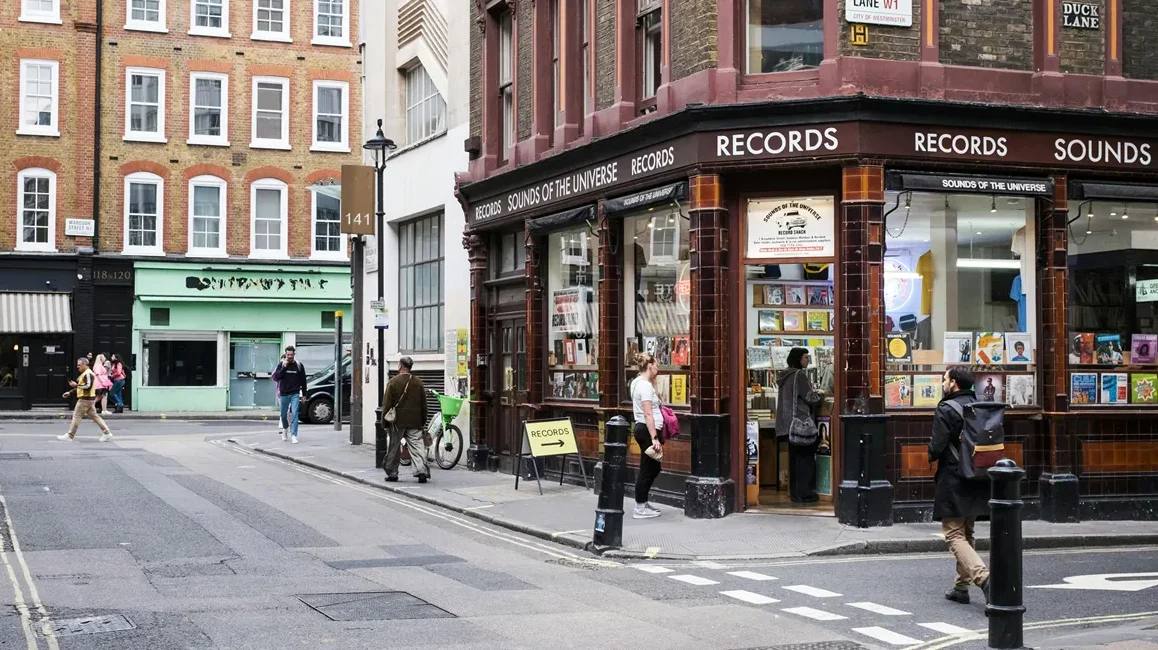
Surviving London business rates in 2026 isn't about hoping for government relief; it's about taking control of the costs you can actually reduce. When the average London shop faces a business rates bill jumping from £3,589 to £8,613 this April, waiting for policy changes is a luxury most retailers can't afford.
The stark reality: 37 retail stores close across the UK every single day. Not because their products weren't good enough or their service wasn't valued, but because the mathematics simply stopped working. Business rates, rent, wages, utilities, the fixed costs that grind profit margins into dust.
But here's what's different about the retailers still thriving: they've stopped fighting battles they can't win and started investing in technology that transforms the battles they can. Self-service kiosks that cut labour costs by 25%. EPOS systems that eliminate inventory waste. Integrated solutions that serve 35% more customers per hour without adding staff.
This isn't theory. It's how independent London retailers are turning £42,000 business rates bills from existential threats into manageable line items by reducing everything else around them.
The London Business Rates Crisis: The Real Numbers
London's business rates have become an existential challenge for independent retailers. The British Retail Consortium and UK Hospitality revealed that in 2023/24, retail and hospitality businesses combined paid almost £9 billion in business rates, accounting for 34% of the overall rates bill whilst representing only 9% of the economy.
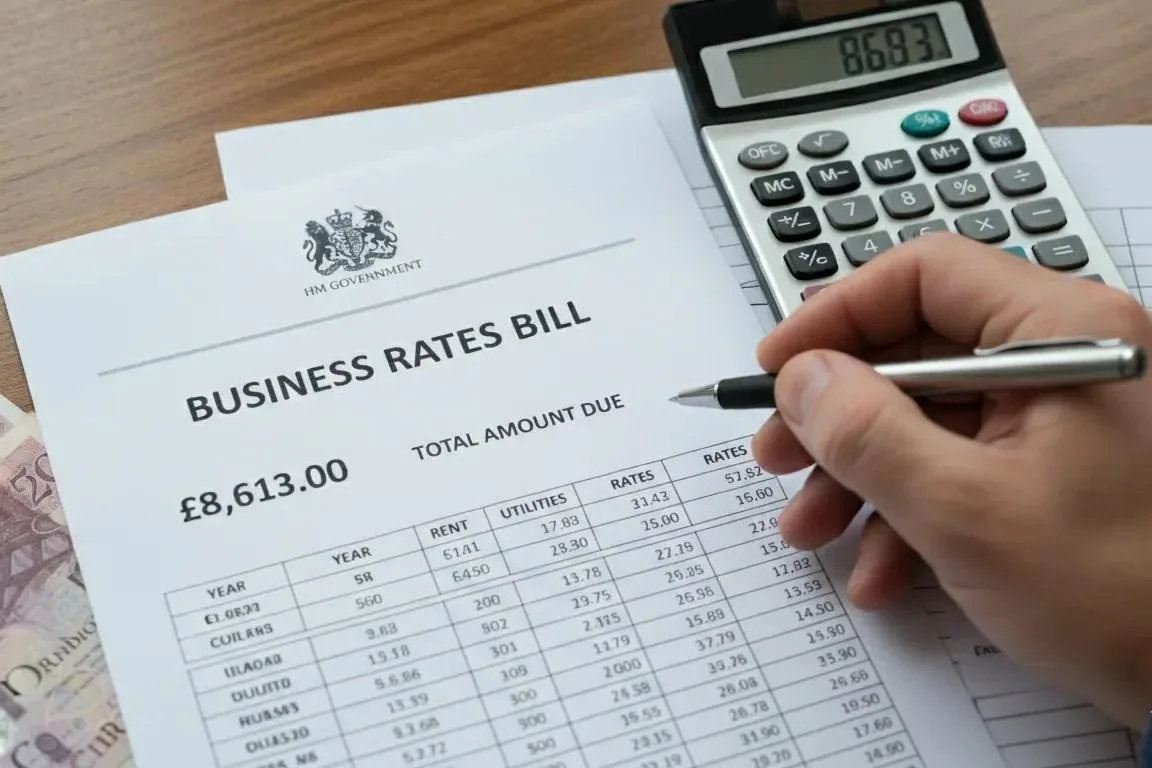
The April 2025 impact was severe. Data from property firm Altus Group shows that the planned reduction in business rates discount from 75% to 40% will see the average shop's business rates bill spiral from £3,589 to £8,613 over the next financial year, a 140% increase.
For London retailers, the compound pressure is suffocating:
- Business rates: Now averaging £8,613 annually for typical shops
- Commercial rent: 25-40% of revenue in London locations
- Labour costs: 25-35% of revenue (rising with National Living Wage increases)
- Utilities and overheads: 10-15% of revenue
With 13,479 UK retail closures in 2024 and 17,350 predicted for 2025 by the Centre for Retail Research, traditional cost-cutting clearly isn't working. The survivors aren't cutting, they're optimising through technology.
Every Month You Wait Costs You Money
Our London partners are saving £30K+ annually with Kayana's self-service kiosks and EPOS systems. Get your custom savings analysis and start reducing costs today!
Book a free consultation today!
Why Traditional Cost-Cutting Accelerates Failure
App4 UK data shows self-service kiosks serve customers up to 5 times faster than traditional tills, whilst staff save up to 20% of their time by not manually taking orders. For London retailers, where every square foot costs premium rent, faster transactions mean higher revenue per square metre.
Critical benefits for London's diverse market:
When business rates increase, the instinctive response is to reduce staff hours, switch to cheaper suppliers, or cut opening times. The data shows this approach backfires catastrophically.
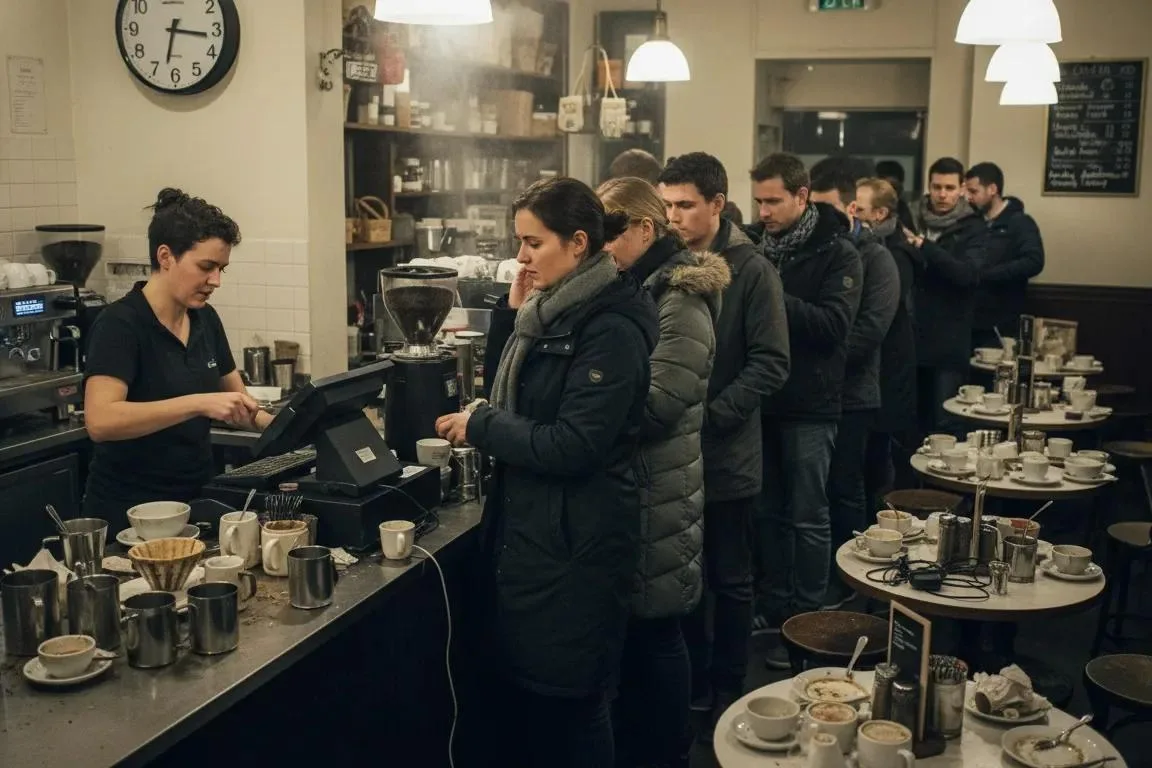
Reducing staff during peak hours creates longer queues, dirtier premises, and frustrated customers. British consumers, already culturally sensitive to queuing, abandon retailers who can't serve them efficiently. One Kayana partner reported a 12% revenue drop within six weeks of reducing weekend staff, completely negating the labour savings.
Cheaper suppliers damage product quality in ways customers notice immediately. In an era where 94.6% of UK card transactions are contactless (Barclays, 2024) and customers can switch retailers in seconds, quality degradation is fatal.
Retailers can also see how clothing retailers use MPOS to reduce checkout friction.
The death spiral of traditional cost-cutting:
Lower costs → Worse experience → Fewer customers → Lower revenue → More desperate cost-cutting → Business closure
The solution isn't spending less, it's spending smarter on technology that simultaneously reduces costs and improves customer experience.
Self-Service Kiosks: Quantifiable Labour Cost Reduction
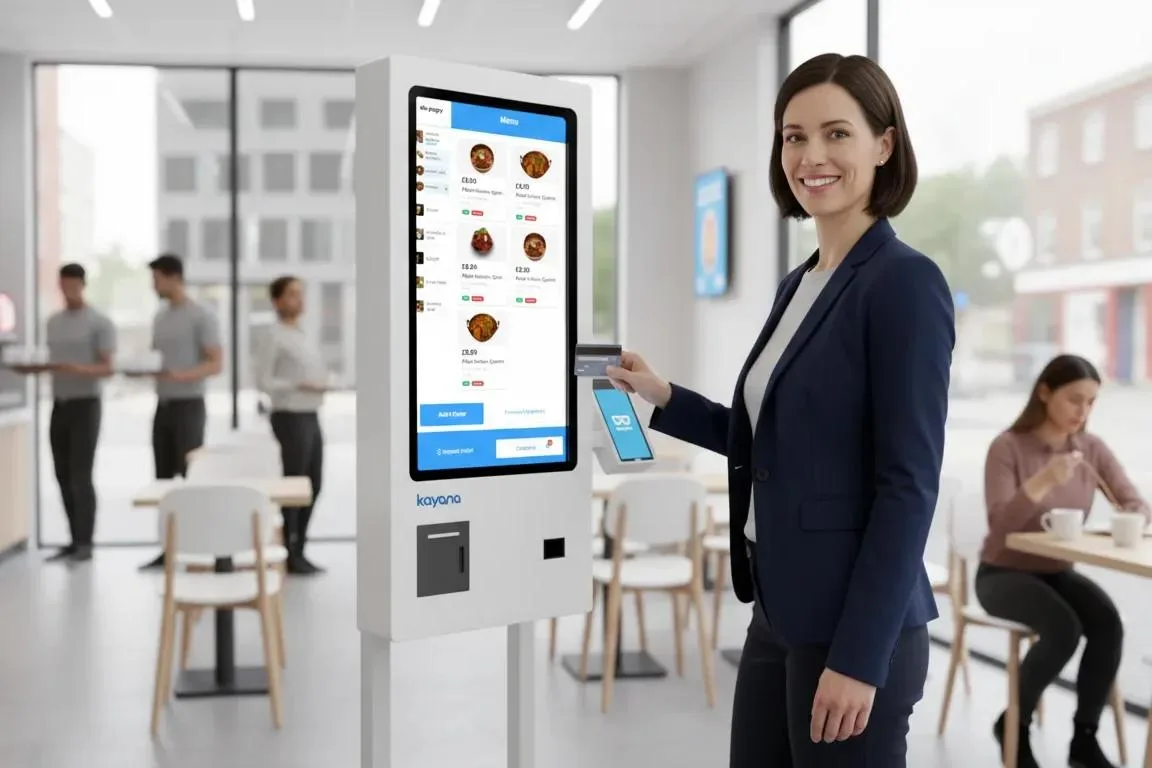
Kayana's self-service kiosks deliver the most immediate and measurable cost reductions for London retailers under business rate pressure.
Here's what we help you achieve:
When you're evaluating whether self-service makes financial sense, we start with a simple comparison: what does your current staffing model cost versus what our technology can deliver?
A full-time minimum wage employee costs you £24,000+ annually (including NICs, pension, holiday pay). Our kiosks operate consistently without sick days, holidays, or scheduling headaches.
Most of our London partners see positive ROI within their first year. Independent research from Flipdish (2024) confirms what we see daily: self-service kiosks typically pay for themselves within 12-18 months, with labour cost reductions of 25-30%.
What our partners actually achieve:
We recently worked with a coffee shop owner in Shoreditch running a 1,200 sq ft space. After installing our system, they reduced peak-hour staffing from three to two employees, saving £18,000 annually.
Their service quality didn't just maintain, but improved. Why? Because our kiosks handled the transaction rush whilst their team focused on what actually matters: making great coffee and creating a welcoming atmosphere.
We don't offer one-size-fits-all pricing because your operation isn't one-size-fits-all. We assess your transaction volumes, peak trading hours, current labour costs, and growth plans to show you exactly what ROI looks like for your specific location.
Ready to see your numbers? Let's talk.
Beyond labour replacement revenue enhancement:
Self-service technology doesn't just cut costs; it also significantly increases revenue per transaction. For instance, research from Flipdish and App4 UK shows that self-service upselling increases average order sizes by 20-30%.
Why? Customers browse without queue pressure, digital prompts consistently suggest add-ons, and there's no social awkwardness about adding extras.
- Contactless preference alignment: With 94.6% of eligible UK card transactions now contactless (Barclays, 2024), self-service kiosks deliver the payment experience customers expect
- Multi-language support: Essential for London's international customer base, without hiring multilingual staff
- Consistent upselling: Digital prompts suggest extras 100% of the time; human staff forget during rushes
- Order accuracy: Eliminates 90%+ of verbal miscommunication errors, reducing waste and refunds
- Queue psychology: Removes British consumers' anxiety about queue-jumping and service fairness
EPOS Systems: The Hidden Cost Elimination Engine
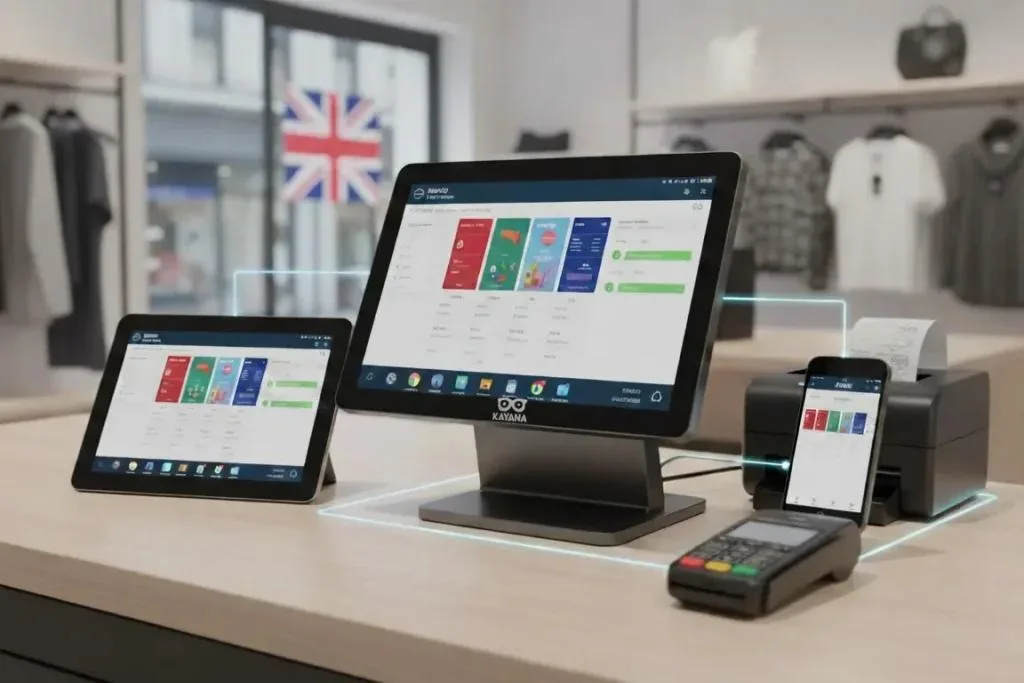
Whilst self-service kiosks provide visible customer benefits, modern EPOS systems deliver equally powerful cost reductions across multiple operational areas.
Inventory management savings:
UK retailers lose an average of 3.2% of revenue to stock shrinkage, waste, and inefficiency. For a retailer with £500,000 turnover, that's £16,000 vanishing annually. Modern cloud-based EPOS systems track every item in real-time, automatically flagging discrepancies and predicting optimal reorder points.
A Kayana partner discovered through EPOS data analysis that they were over-ordering pastries by 23% (leading to waste) whilst under-ordering oat milk by 31% (creating lost sales). By addressing these imbalances using EPOS insights, the company saved approximately £5,400 annually.
The wider shift towards modern retail technology is explored in the death of the cash register and rise of EPOS and MPOS.
Labour scheduling optimisation:
Most retailers over-staff quiet periods and under-staff peaks based on habit rather than data. EPOS systems analyse historical transaction patterns to identify precisely when staff are needed.
One partner used six months of EPOS data to restructure rotas, reducing total weekly labour hours by 18 whilst improving coverage during actual demand peaks. Annual labour savings: £12,600, with measurably improved customer service scores during busy periods.
Cash handling elimination:
Cash handling costs UK businesses £1.50-£2.50 per transaction when accounting for banking time, float management, theft risk, and reconciliation. With UK Finance reporting that contactless payments represented 38% of all UK payments in 2023 (18.3 billion transactions), many London retailers are transitioning to cashless operations.
EPOS data typically reveals that only 5-10% of customers now prefer cash. Eliminating cash handling saves approximately 90 minutes weekly in banking time (£3,120 annual value at National Living Wage rates), removes cash discrepancies averaging £85 monthly, and eliminates theft risk.
Automated compliance:
HMRC's Making Tax Digital (MTD) requirements mandate the recording of digital transactions. Non-compliant businesses face penalties of up to £400 per offence. Modern EPOS systems ensure automatic MTD compliance whilst generating real-time VAT reports, eliminating the need for accountancy hours and the risk of penalties.
For allergen compliance under Natasha's Law, EPOS systems display full ingredient information at the point of sale, protecting businesses from £5,000+ fines whilst reducing staff training burden.
Self-service technology can also help businesses manage customer demand, as shown by the advantages of self-service kiosks for restaurants.
Business Rates Going Up. Your Costs Don't Have To.
You can't control your rates bill. But you can control the £30K+ you're losing to inefficient operations. We'll show you exactly where and how to save.
Book a free consultation today!
Integration: Technology That Compounds Savings
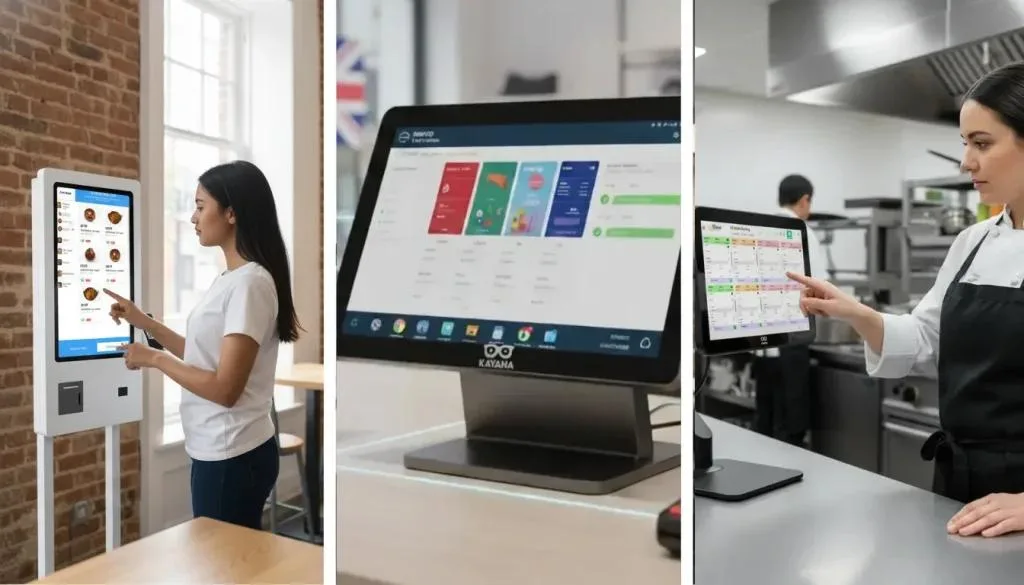
The transformative impact occurs when self-service kiosks and EPOS systems integrate seamlessly, creating an efficiency multiplier effect.
The integrated workflow:
Customer orders via kiosk → Order transmits instantly to kitchen display → Kitchen begins preparation immediately → EPOS updates inventory automatically → Customer collects quickly → System captures feedback → Data informs tomorrow's stock decisions
This eliminates order errors (worth 2-3% of revenue), verbal miscommunication, inventory miscounts, and customer complaints about wait times. FoodHub reported that UK restaurants using integrated kiosk systems saw a 21% reduction in customer wait times within 3 months of implementation.
A Kayana partner's integrated system reduced average order-to-collection time from 8.5 minutes to 4.2 minutes during peak hours, a 51% improvement. This enabled serving 35% more customers per hour during breakfast rush without additional labour costs, directly increasing revenue whilst costs remained flat.
Your Technology Implementation Roadmap
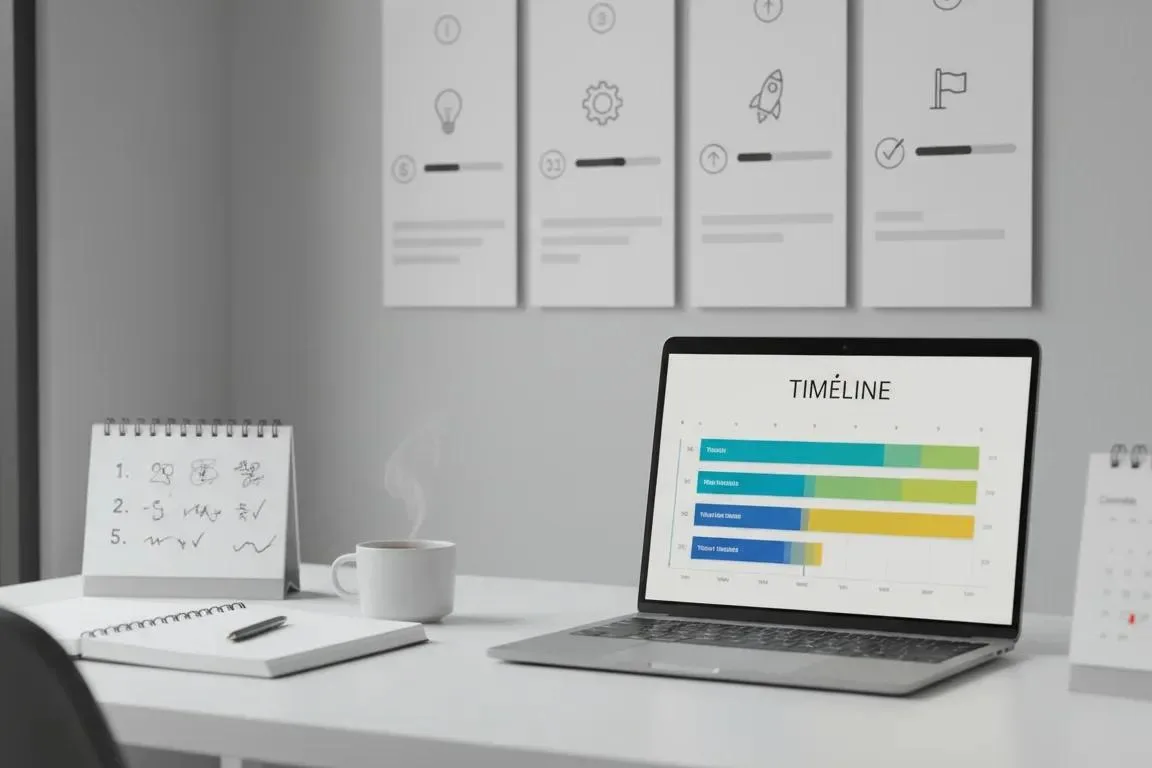
For London retailers ready for surviving London business rates strategies:
Phase 1: Cost Audit (Week 1)
Document your baseline costs across labour (by hour/day for 4 weeks), inventory waste percentage, average transaction times, cash handling time, and order error frequency. This data calculates ROI for technology investment.
Phase 2: EPOS Foundation (Weeks 2-4)
Implement a cloud-based EPOS designed for UK retail with MTD compliance and payment integration. This establishes your data infrastructure for all subsequent optimisation. Budget: £2,000-£5,000 upfront, £100-£300 monthly.
Phase 3: Self-Service Layer (Weeks 5-8)
Add one self-service kiosk to test customer adoption and workflow. Position near the entrance or alongside the traditional till. Monitor adoption rates and basket values. Add a second kiosk once the first achieves 40%+ transaction volume. Budget: £3,000 - £8,000 per kiosk; £50 - £150 per unit per month.
Phase 4: Integration & Optimisation (Weeks 9-12)
Connect systems for seamless data flow. Add kitchen displays if preparing food/beverages. Implement automated inventory reordering. Use analytics to continuously refine scheduling.
Phase 5: Continuous Measurement (Ongoing)
Start by reviewing labour costs monthly compared to the prior year. Additionally, track inventory waste percentages, average transaction values, and customer satisfaction scores.
Finally, calculate the actual cost per transaction across all channels to gain a complete financial picture.
Ready to Build Your Custom Roadmap?
We'll assess your operation and create a phased implementation plan tailored to your business, minimising disruption whilst maximising cost savings.
Book a free consultation today!
Addressing Investment Concerns

"The upfront cost seems high given business rates pressure"
While business rates are a fixed cost you cannot reduce, investing in technology allows you to lower the variable costs within your control. Consequently, this generates ongoing savings that quickly exceed the initial investment.
Furthermore, the government's Help to Grow: Digital scheme offers up to £5,000 toward technology adoption. In addition, many providers offer lease arrangements at £150-£300 per month, which is comparable to just 1-2 days of minimum-wage labour.
The question isn't whether you can afford the technology, it's whether you can afford not to implement it whilst competitors gain cost advantages.
"Will customers actually use self-service?"
UK consumer data consistently shows 68% of shoppers prefer self-service for routine transactions. Barclays data shows that British shoppers made an average of 236 contactless payments in 2024. Customers want speed and efficiency. App4 UK case study: Waterside Holiday Group saw 60-75% of orders through kiosks on busy days.
"What if technology fails?"
Modern cloud-based systems offer 99.7% uptime, far exceeding human staff reliability (UK workers average 5.8 sick days annually). Quality providers offer UK-based support and resolve issues remotely within 30 minutes. Systems include offline capability, allowing transactions to continue processing even if internet connectivity temporarily drops.
Take Action Before It's Too Late
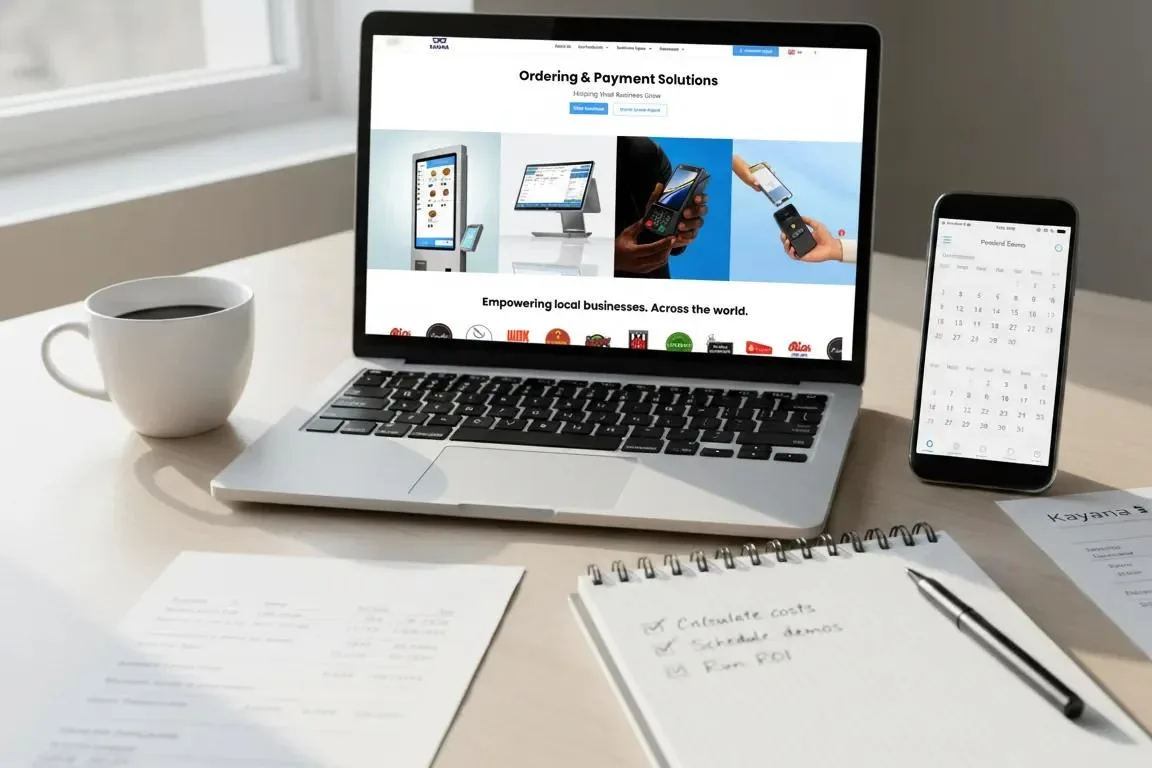
Business rates won't decrease. Rent won't decrease. But your operating costs can decrease by 25-30% whilst revenue increases 15-20% if you implement the right technology strategy.
Immediate next steps:
- Calculate your current cost structure across labour, inventory waste, cash handling, and errors
- Schedule demos with UK-compliant EPOS and kiosk providers specialising in your retail category
- Run ROI calculations using your actual numbers to determine the break-even timeline
- Visit London retailers using integrated systems to experience the customer journey
The retailers thriving on London high streets despite business rates won't be those with the lowest fixed costs; they'll be those who built the most efficient operations around their unavoidable expenses.
Ready to reduce your operating costs by 25-30% whilst improving customer experience?

Kayana specialises in designing integrated order processing technology for UK small and medium-sized businesses under pressure from business rates.
Our self-service kiosks and EPOS systems are built for British retailers, from MTD compliance and contactless preferences to the efficiency demands of high-cost London locations.
We'll analyse your operation, calculate a realistic ROI based on your actual numbers, and design a phased implementation that minimises disruption whilst maximising cost savings.
Build Your Business Rates Survival Strategy with Kayana
Book a consultation to discover how technology transforms your response to London's business rates challenge.