
How Football Stadiums in UK Can Increase Matchday Revenue by 20% Without Expanding Concessions
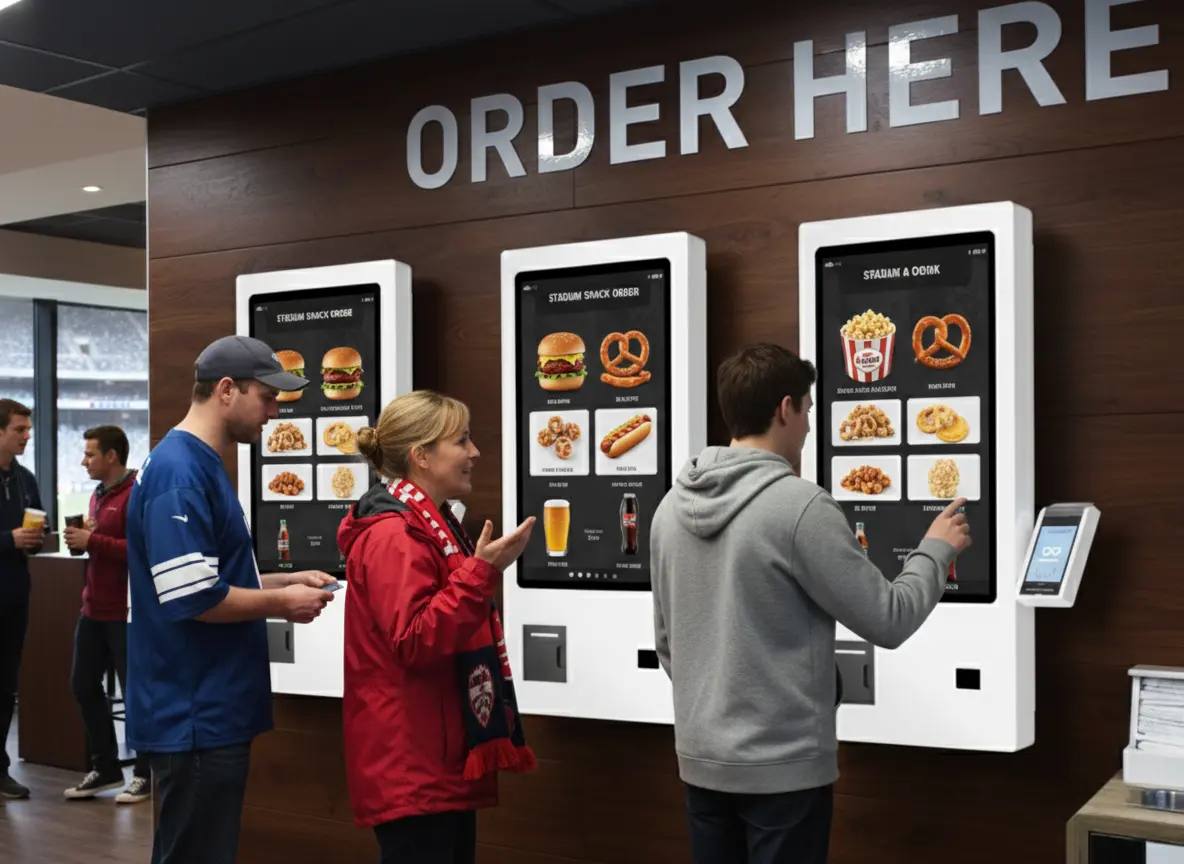
Football stadium technology is increasingly shaping how clubs capture (or lose) revenue during the most intense moments of matchday.
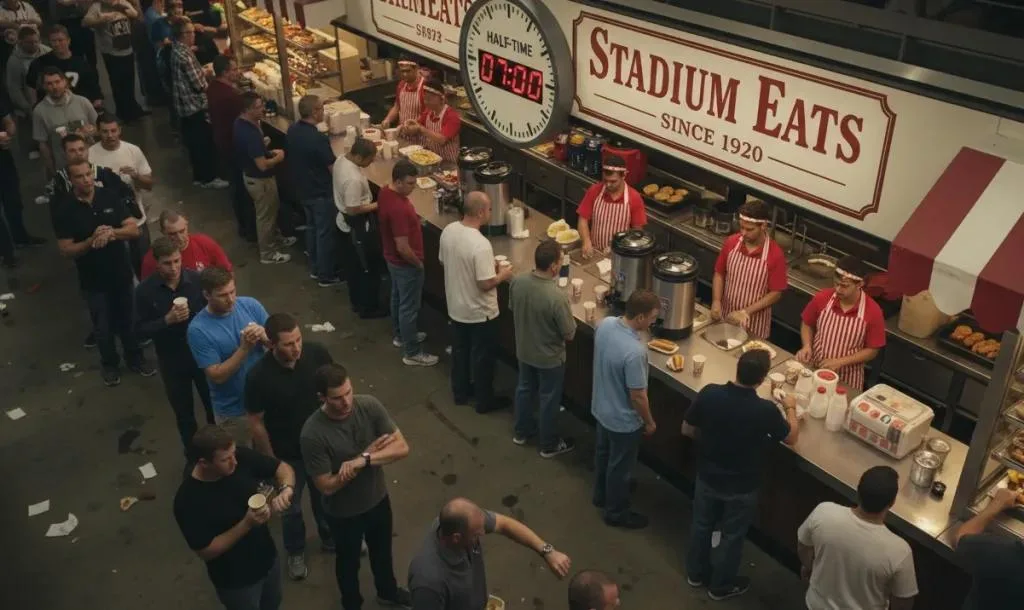
Now picture this: the halftime whistle blows at a football stadium in Cheshire. Within seconds, thousands of fans surge toward the concessions. The queue snakes back toward the stands. Families eye the line, calculate the wait time, and reluctantly return to their seats empty-handed.
The club has just lost thousands in potential revenue in fifteen minutes.
This scenario plays out across UK football stadiums every matchday from League Two to the Championship, non-league to established clubs. Not because fans don't want to spend, but because traditional concession operations can't handle peak demand.
The solution isn't to build more kiosks or hire additional staff. It's transforming the entire order processing process.
Football clubs across the UK are discovering that stadium technology, specifically self-service kiosks, can increase matchday revenue by 20% or more without expanding the physical footprint, rising labour costs, or compromising the fan experience.
Here's precisely how they're doing it.
The £50,000 Problem Every Football Stadium Faces in terms of Football Stadium Technology
Let's talk numbers that matter to your bottom line.
The average Football club hosts 23 home matches per season. With attendance ranging from 1,500 to 3,500 fans, the potential spend per match is substantial. According to Deloitte's Annual Review of Football Finance 2023, the average fan spends £8-£12 on food and beverage per match.
Yet most stadiums capture only 40-50% of this potential revenue. The culprit? Operational bottlenecks during peak periods.
As UK businesses face ongoing labour shortages, self-service solutions are proving to be a game-changer. Learn how these technologies are helping businesses adapt and thrive.
Here's what's happening: Halftime lasts exactly 15 minutes. In that window, your concessions need to serve hundreds of customers. With traditional counter service, each transaction takes 90-120 seconds from greeting to payment to order fulfilment. Even with three staff members working efficiently, you're serving roughly 23-30 customers per kiosk during halftime.
The mathematics are brutal regardless of stadium size. If 40% of your crowd wants to purchase something at halftime, but your operation can only handle 25% of capacity, you're losing 15% of your attendance.
For a 5,000-capacity stadium, that's 750 potential transactions lost. At an average value of £10, that's £7,500 in missed revenue per match, potentially £172,500 per season.
Scale this to a 15,000-capacity Championship stadium, and you're looking at £22,500 lost per match over £500,000 annually.
Why Traditional Solutions Don't Work (and Why Clubs Keep Trying Them)
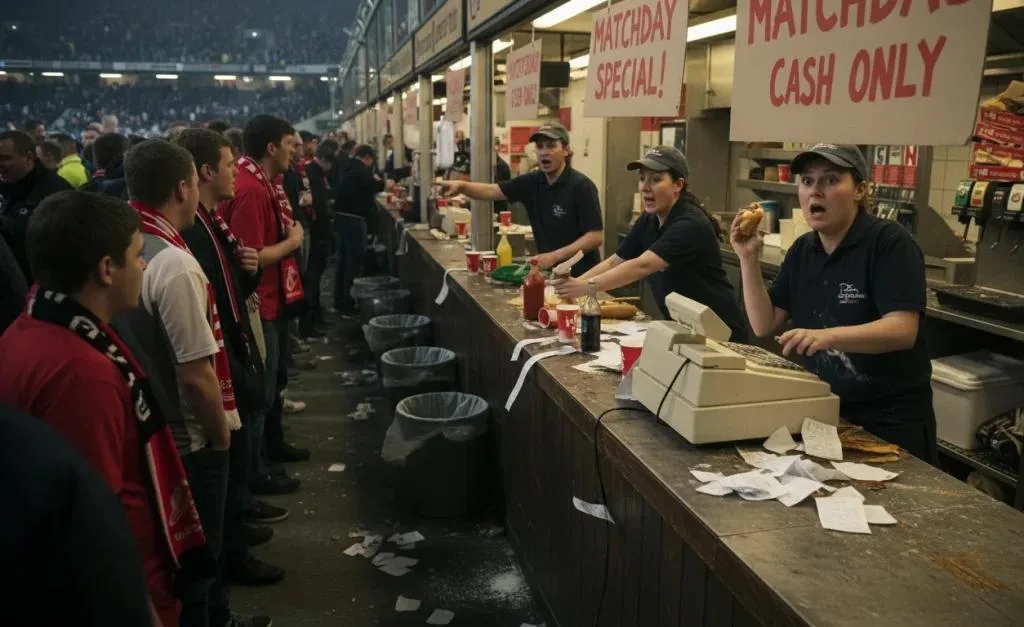
Before we explore football stadium technology solutions, let's examine why conventional approaches fall short across all levels of the football pyramid.
Hiring More Staff Seems Obvious Until You Calculate the Costs of Football Stadium Technology
Adding three matchday staff members costs approximately £900 per match (£15 per hour, including National Insurance contributions and matchday rates). For a club with 30 home matches, that's £27,000 annually.
But here's the problem: more staff doesn't necessarily mean faster service. The bottleneck isn't just labour, it's the inherent inefficiency of traditional order-taking. Staff must listen, process and enter orders, handle payments, and communicate with the kitchen. Each step adds seconds that compound during peak demand.
Whether you're operating with five matchday staff at a 2,000-capacity ground or 30 at a 20,000-seat stadium, the fundamental inefficiency remains the same.
Mobile checkout can help businesses respond to sudden peaks in demand, as explained in how businesses use MPOS to absorb demand spikes.
Is your stadium losing £50,000+ in missed revenue every season?
Book a free 30-minute consultation with our stadium technology specialists and we'll analyze your current operations and show you exactly how much revenue you're leaving on the table.
Book a free consultation today!
Expanding Physical Concessions Requires Capital You Don't Have
Building additional concession stands costs between £30,000 and £80,000, depending on complexity. That's before considering planning permissions, electrical work, plumbing, and ongoing maintenance costs.
For clubs operating on tight margins, particularly outside the top two divisions, this capital investment rarely justifies the return. Your concessions sit idle for most of the week, and matchday revenue alone struggles to support significant infrastructure investment.
How Football Stadium Technology is Revolutionising Self-Service Kiosks
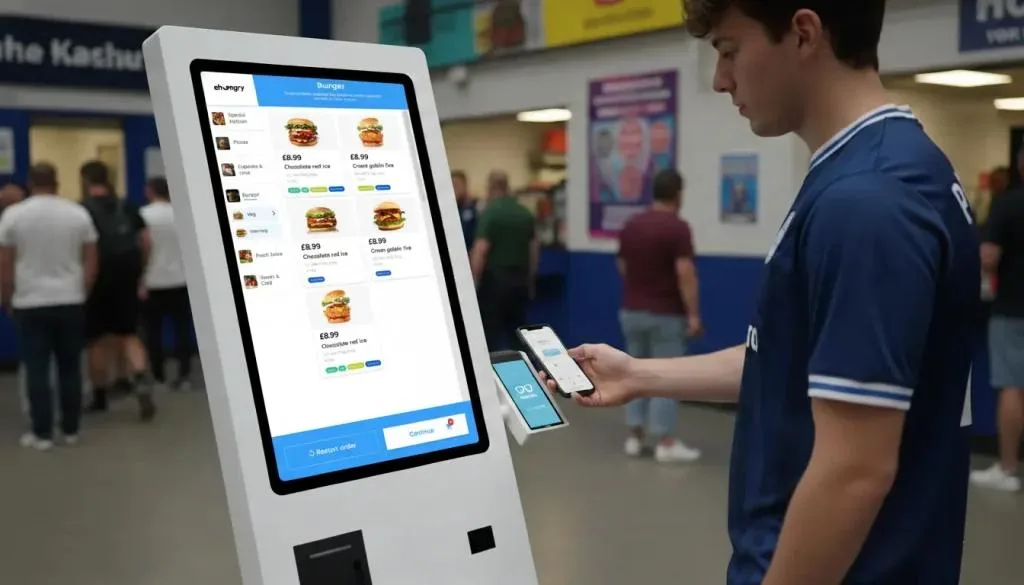
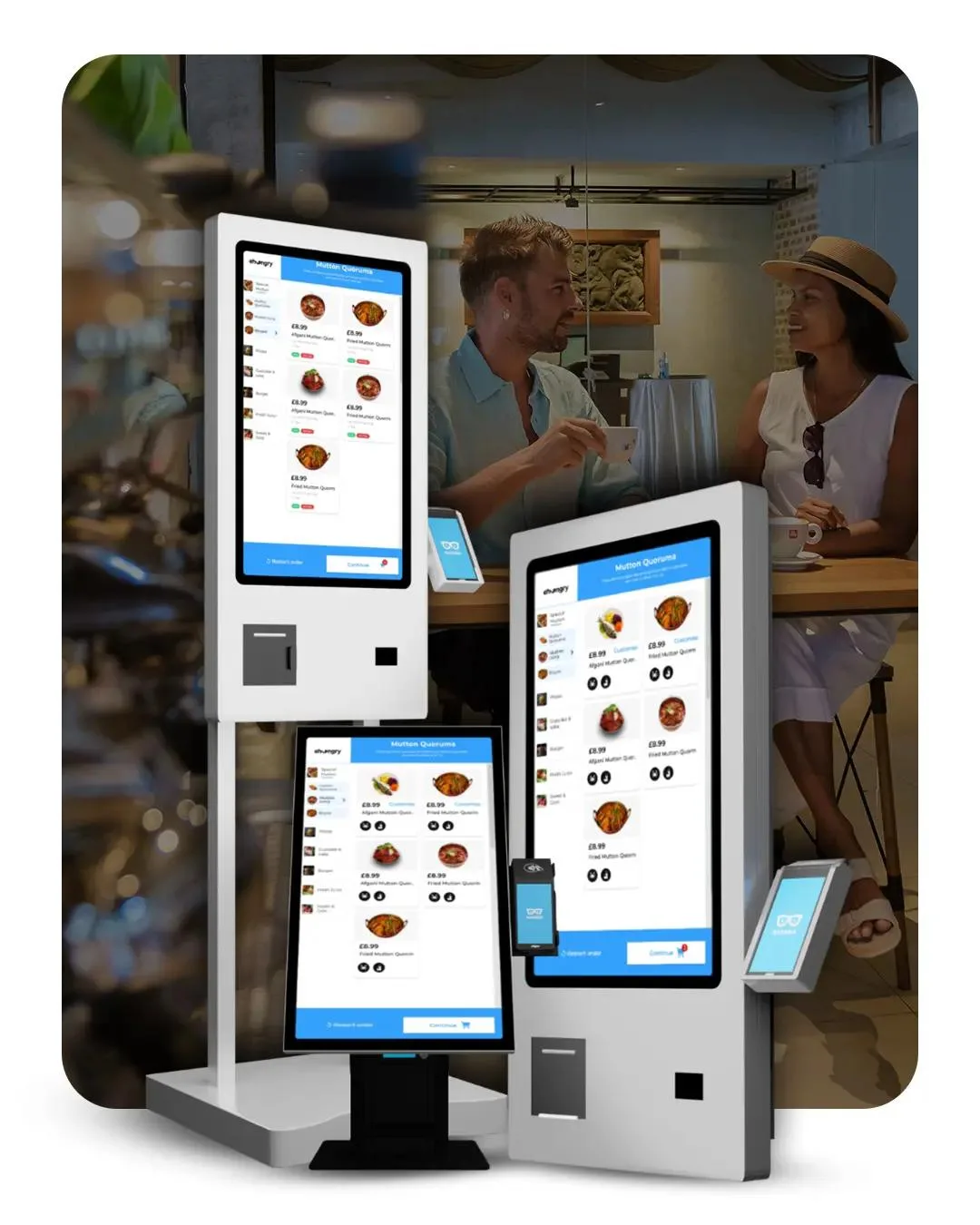
A self-ordering kiosk for stadiums and clubs does something remarkable: it shifts the order-input burden from your staff to your customers, who actually prefer it, making it a game-changer in football stadium technology.
Here's why this model works exceptionally well in stadium environments, regardless of capacity or league standing.
Speed: Cutting Transaction Times by 60%
Implementing a self-ordering kiosk as part of your football stadium technology can drastically improve the fan experience. Average transaction times drop from 90-120 seconds to just 35-45 seconds, helping clear concourses quickly.
Customers can browse the menu visually, customise orders without miscommunication, and pay contactlessly, all without waiting for staff availability.
The impact is immediate. A single self-service kiosk can process 20-25 orders during a 15-minute halftime period. Deploy four kiosks strategically around your stadium, and you've suddenly increased throughput capacity by 200-300%.
Self-service technology can also help venues increase ordering capacity, with the advantages of self-service kiosks offering useful insights.
Order Value: The Unexpected 18% Uplift
Something fascinating happens when customers order via self-service kiosks: they spend more.
Kayana's data from stadium clients shows an average order value increase of 15-18% compared to traditional counter service. Why? Three psychological factors are at play:
- Visual merchandising: High-quality images trigger an appetite response. When fans see a loaded hot dog or gourmet burger on screen, they're more likely to purchase than when reading a static menu board.
- Upselling without pressure: Digital prompts, such as "Add chips for £2?" or "Upgrade to a meal deal?" are effective because they eliminate social pressure and queue anxiety. Customers make decisions at their own pace.
- No judgment ordering: Fans ordering multiple items, desserts, or premium options don't feel scrutinised by staff or other customers waiting behind them.
Want to see how this works for your specific stadium?
Our specialists will walk you through real examples from clubs similar to yours and calculate your potential revenue increase.
Book a free consultation today!
Labour Reallocation: From Order-Taking to Order-Making
The mathematics are compelling. If your average transaction value increases from £9.50 to £11.20 (an 18% uplift), and you process 400 transactions per match instead of 250, your revenue jumps from £2,375 to £4,480, a 89% increase per match.
Self-service kiosks don't eliminate jobs; they make existing labour more productive.
Instead of three staff members taking orders at counters, you redeploy them to food preparation and order fulfilment. This accelerates kitchen output and reduces the time between order placement and pickup.
One staff member monitors the kiosks, assists customers who require assistance, and handles payment issues; the other two focus entirely on efficiently fulfilling orders.
For a minor operation: One staff member monitors 2-3 kiosks, assists customers who need help, and manages payment issues. The remaining staff focus entirely on efficiently fulfilling orders.
For a larger stadium: Two staff members monitor 12 kiosks across different concourse areas, while the bulk of your team concentrates on kitchen operations and rapid order fulfilment.
This reallocation delivers faster service, shorter pickup wait times, and higher customer satisfaction without increasing headcount or wage costs.
Real-World Implementation: What Works in UK Football Stadium Technology
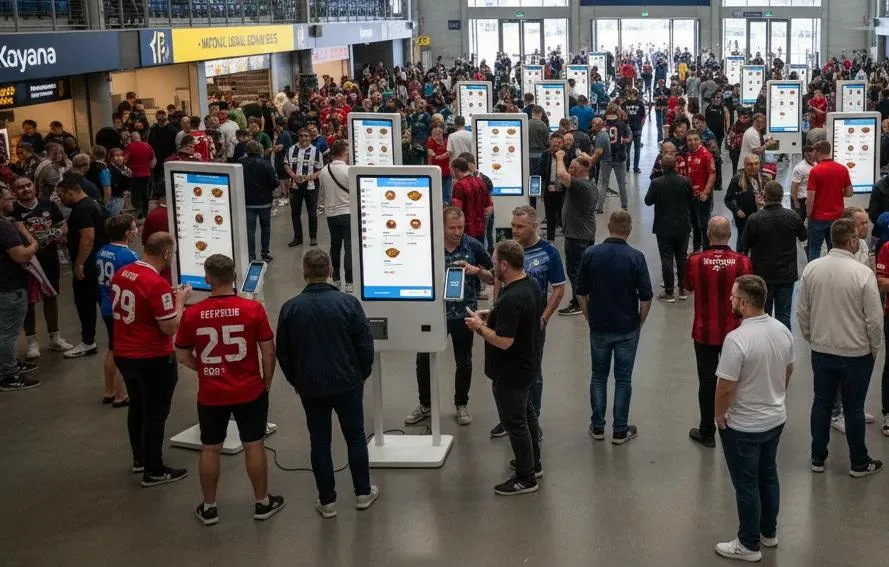
Let's move from theory to practice. Here's how Football clubs are successfully deploying self-ordering kiosk systems.
Strategic Placement of Football Stadium Technology Matters More Than Quantity
You don't need a kiosk at every concession point. Strategic placement near high-traffic areas such as main entrances, popular stands, and toilet facilities ensures maximum visibility and usage.
Successful stadiums follow the "3-kiosk rule": place self-ordering kiosks where they're immediately visible, where queues naturally form, and where foot traffic peaks during halftime.
Want to see how this works for your specific stadium?
Our specialists will walk you through real examples from clubs similar to yours and calculate your potential revenue increase.
Book a free consultation today!
Menu Design Determines Success or Failure
Your self-service kiosk interface isn't just a digital menu; it's a revenue-generating tool that works identically whether you're serving 1,000 or 20,000 fans.
Effective stadium kiosk menus follow these principles:
- Large, thumb-friendly buttons (no fiddly navigation)
- High-resolution food photography (amateur photos reduce conversion)
- Simplified categories (Drinks, Hot Food, Snacks, not 12 subcategories)
- Prominent meal deals and bundles (increase average order value)
- Quick-select favourites (pint and pie in two taps)
According to Insider Media, a Championship Football Team installed self-ordering kiosks at their stadium alongside traditional tills. The system has increased the total number of order positions by more than 50%, featuring 13 traditional till counters and 19 self-order units, which helps fans order food and drinks faster on match days.
Enhance Football Stadium Technology with Kitchen Display Systems
Here's where many stadium technology projects fail: the kiosk is brilliant, but the kitchen is overwhelmed by paper tickets or misses orders entirely.
Successful implementations integrate self-service kiosks with Kitchen Display Systems (KDS). Orders flow digitally from kiosk to kitchen screens. Staff see preparation times, prioritise orders, and mark items complete, eliminating lost tickets, miscommunication, and delays.
Kayana's stadium solutions offer seamless integration between self-service ordering and kitchen management, ensuring your operations stay synchronised during peak demand.
Integrating self-service kiosks with all-in-one hospitality technology can create a seamless experience for both customers and staff. Explore how this comprehensive solution is transforming the hospitality industry here."
Addressing the Three Objections Every Stadium Operations Manager Raises
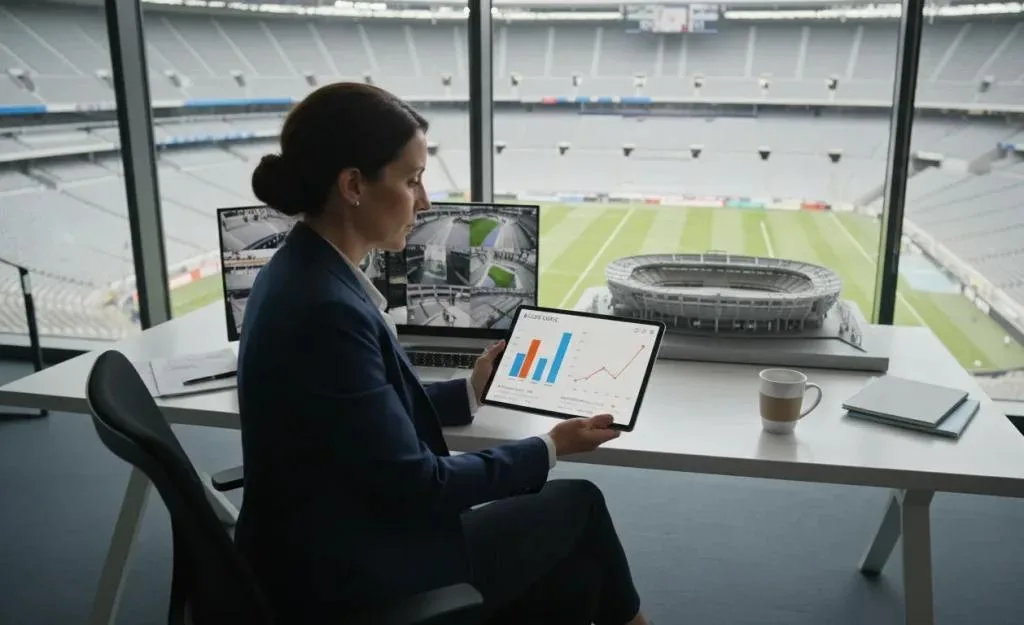
Let's tackle the concerns you're probably thinking about right now.
"Our Fans Aren't Tech-Savvy Enough for Football Stadium Technology"
This is the most common objection and the easiest to disprove.
Your fans already use contactless payment cards, scan QR codes for match tickets, and use smartphone apps daily. A well-designed self-service kiosk with intuitive interfaces requires less technical skill than using a cash machine.
Moreover, adoption happens quickly. Initial usage might be 30-40% in the first match, but by match three, 70-80% of customers choose kiosks over queues. The reason? Speed. Once fans experience 2-minute ordering versus 8-minute queuing, they never go back.
"What About Cash Payments?"
According to UK Finance, contactless payments accounted for 38% of all payments made in the UK in 2023. While there's no official data for football stadiums specifically, their demographics suggest this figure could be even higher. Football attendees are predominantly under 50 and generally comfortable with making card and mobile payments.
That said, smart self-ordering kiosk deployments maintain one traditional counter for cash transactions and assisted service. This hybrid model accommodates everyone while channelling the majority toward self-service.
For a more detailed look at MPOS use case, explore the mobile point of sale strategy for stadiums.
"What If the System Goes Down During a Match?"
Legitimate concern. Here's how professional deployments mitigate this risk:
- Offline mode capability: Quality kiosks continue processing orders even if internet connectivity drops, syncing data when the connection is restored
- Backup traditional service: Keep one counter operational for contingencies
- Local support: Work with UK-based providers offering same-day technical support
Kayana's self-service kiosk solutions include UK-based technical support, ensuring issues are resolved quickly without impacting matchday operations.
Beyond Revenue: Three Hidden Benefits Stadium Managers Discover
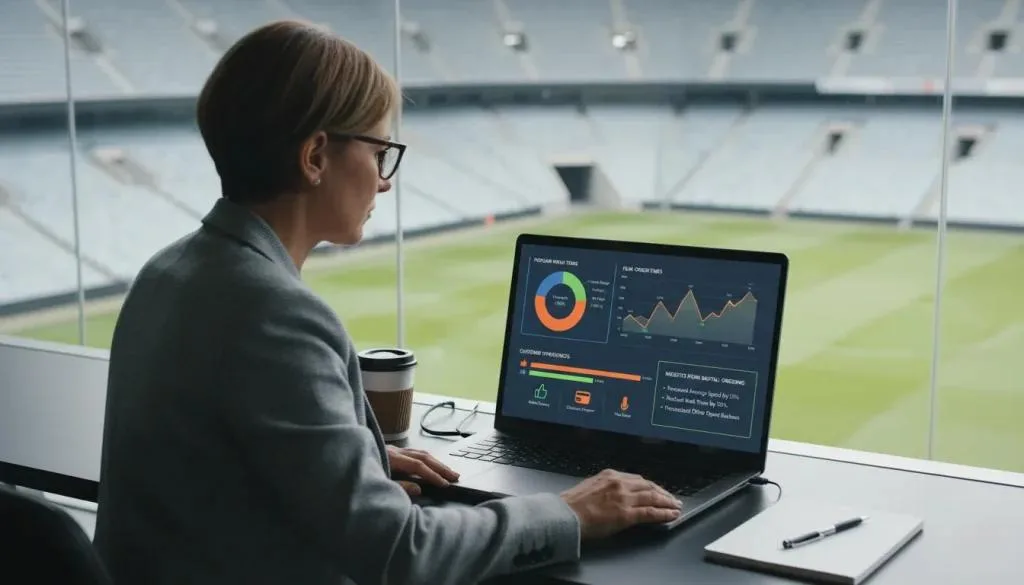
The financial case is compelling, but clubs implementing self-service kiosks report unexpected operational benefits.
Data-Driven Menu Optimisation
Digital ordering generates granular data, including which items sell best, which combinations customers choose, when orders peak, and how long preparation takes.
This intelligence enables you to continuously optimise your menu, eliminate slow-moving items, create targeted promotions, and accurately forecast inventory.
One Football club discovered that 68% of kiosk users ordering hot dogs added onions, but only 15% at traditional counters. Why? Counter staff weren't consistently asking. Armed with halftime, they prepared hot dogs with popular toppings in advance, further accelerating service.
Staff Satisfaction Improvement
Taking orders during half-time chaos is stressful. Staff face impatient customers, struggle to hear over crowd noise, and make ordering errors under pressure.
Self-ordering kiosks eliminate this stress. Staff focus on food preparation and customer assistance in more engaging, less pressured roles. Multiple stadium clients report improved staff retention and easier matchday recruitment after implementing self-service.
Enhanced Fan Experience
Faster service means fans spend more time enjoying the match and less time standing in queues. They return to their seats before the second half begins, improving overall satisfaction.
Additionally, kiosk ordering accommodates individuals with social anxiety, hearing difficulties, or language barriers, creating a more inclusive environment.
The benefits of self-service kiosks extend beyond stadiums, with coffee shops also leveraging this technology to streamline operations and enhance customer satisfaction. Discover how coffee shops are embracing this innovation here.
The Competitive Advantage You're Building
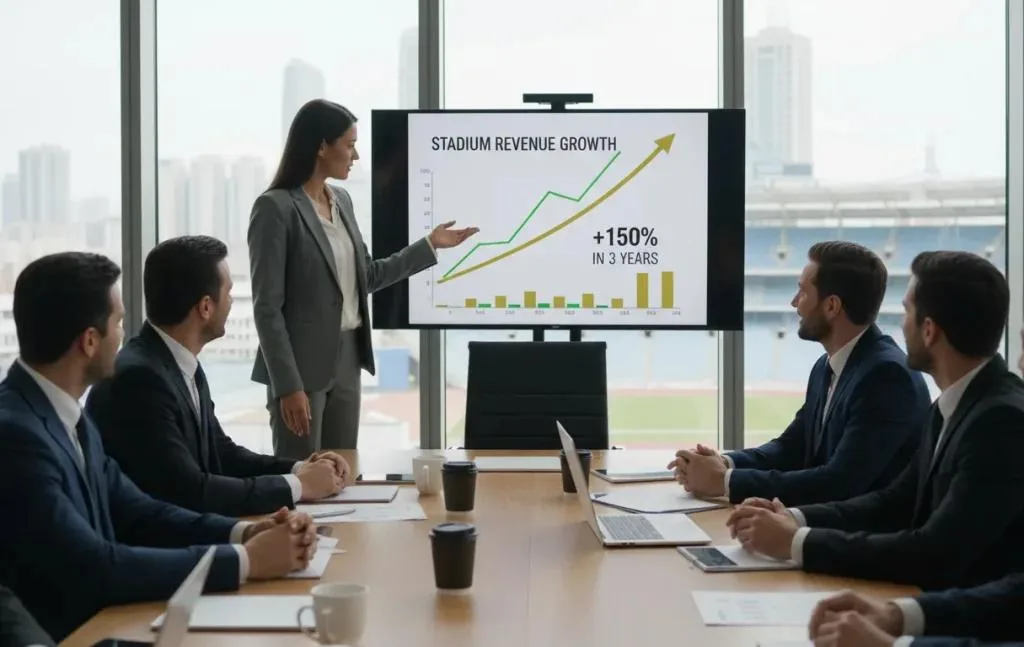
Here's what most Football clubs don't realise: implementing self-service kiosks isn't just about immediate revenue gains. You're building infrastructure that enables multiple future revenue streams.
Digihalftimering platforms enable dynamic pricing (premium pricing for high-demand matches), pre-match ordering (fans order from their seats and pick up during halftime), subscription models (season ticket holders receive meal deals), and sponsorship integration (branded menu sections and promotional offers).
Clubs that deploy self-service technology today are positioning themselves for tomorrow's revenue opportunities, while competitors are still struggling with half-time queue management.
Why UK Stadiums Choose Kayana's Self-Service Solutions to Improve Football Stadium Technology
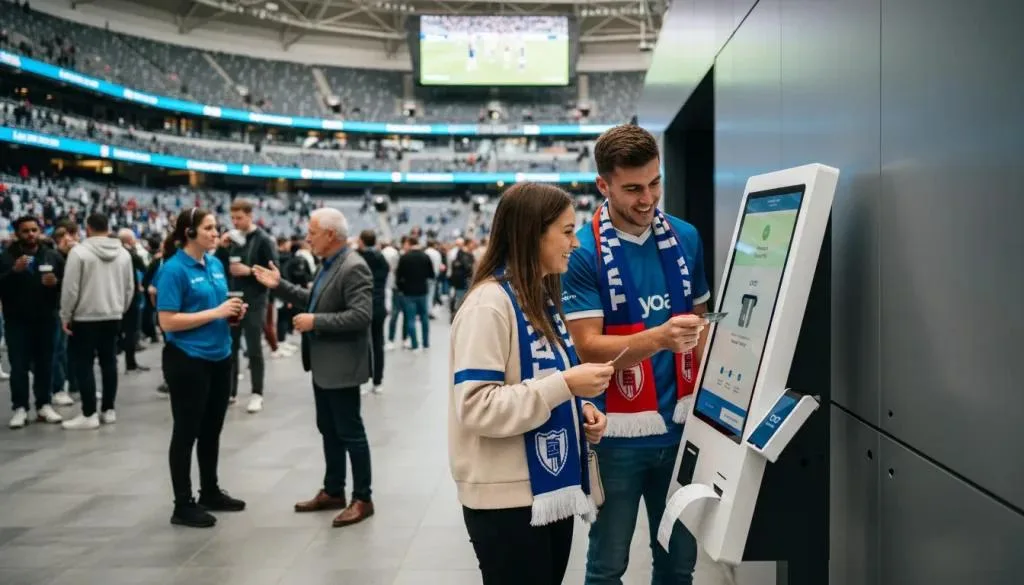
Football clubs partnering with Kayana for self-service kiosk implementations benefit from solutions designed specifically for UK stadium environments.
Our systems cater to the unique demands of matchday operations, including peak loads during 15-minute windows, seamless integration with existing EPOS infrastructure, compliance with UK payment regulations, and offline functionality to address connectivity challenges.
Moreover, the support team at Kayana understands Football operations; we're not adapting solutions built for American sports venues or European arenas.
We're at Kayana designing for queuing culture, contactless payment preferences, and the specific challenges of UK stadium concessions.
Turn Every Matchday into a Revenue-Generating Experience!
Explore Kayana's stadium technology solutions to discover how Football clubs are transforming matchday revenue.
Your Next Step: From Revenue Loss to Revenue Growth
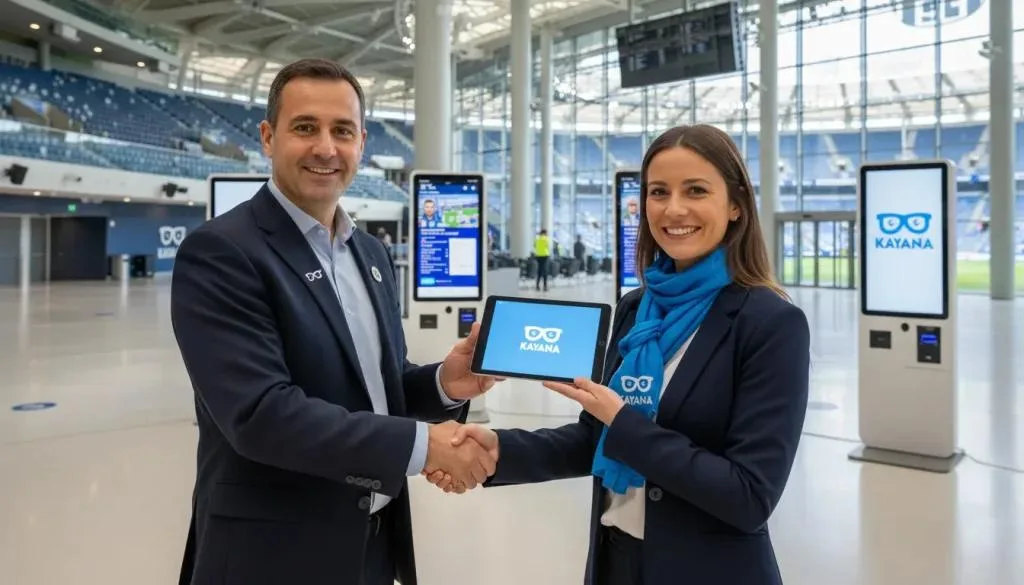
Every match without self-service kiosks is a match where you're leaving £4,000 to £6,000 on the table. Over a 23-match season, that's £92,000-£138,000 in unrealised revenue.
The clubs that act now before the start of next season will have optimised operations, trained staff, and proven systems in place when matchday arrives. They'll capture revenue that competitors continue to lose due to queue congestion.
The question isn't whether self-service technology works for Football stadiums. The data proves it does. The question is whether you'll implement it this season or watch competitors gain the advantage.
Discover how Kayana's self-service kiosk solutions can transform your matchday concessions, or speak with our stadium technology specialists to build your customised implementation roadmap.
Your fans are eager to order more quickly. Your kitchen is ready to serve more efficiently, and your revenue is poised to grow by 20% or more.
The only thing waiting is your decision.
Ready to Transform Your Matchday Revenue?
Book a free 30-minute consultation with Kayana's stadium technology specialists. We'll discuss your specific requirements and show you exactly what's possible.