
Benefits of Mobile Tap-to-Pay Systems for Small Businesses
Introduction
Small businesses are built on convenience, speed, and customer satisfaction. In a world where no one pays in cash, providing contemporary payment facilities no longer seems like a luxury but a necessity. The mobile tap-to-pay is one of the most effective solutions that can be implemented by a small business.
Tap-to-pay technology rapidly becomes the new trend as more consumers give out their money and initiate purchase transactions through their smartphones, smartwatches, or contactless cards. mall-business owners stand to gain much from this system. It improves customer relationships, raises sales, lowers costs, and keeps them abreast.
Now, we will discuss the best advantages of the mobile tap to pay system and why this technology should be adopted by small businesses.
What Is a Mobile Tap-to-Pay System?
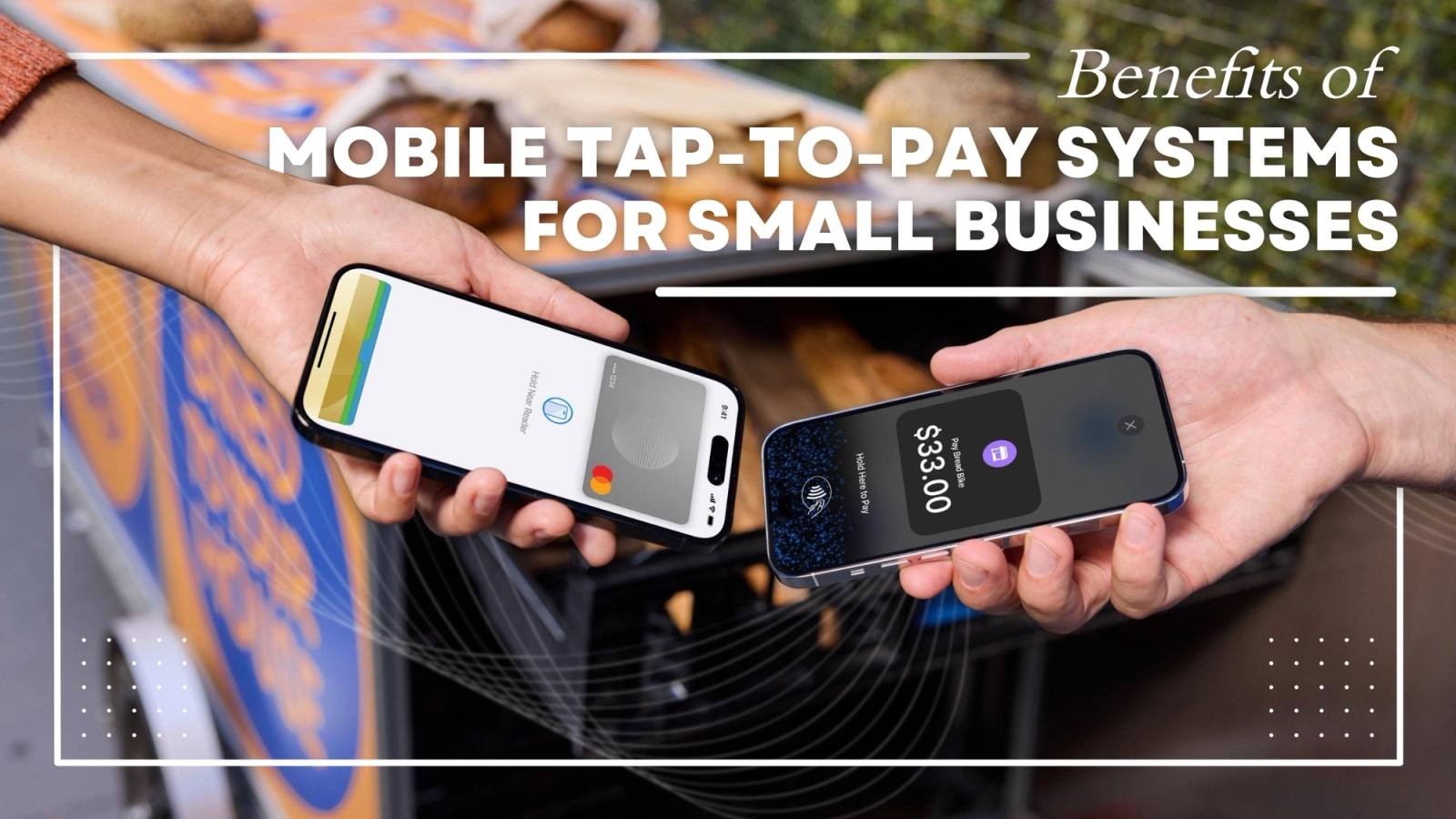
A mobile tap-to-pay device enables the utilisation of contact-free payment services by tapping a customer's contactless device or smartphone against a payment terminal that supports tap-to-pay.
The system operates on Near Field Communication (NFC) technology, which ensures the secure transmission of payment information within seconds. Such swiping or card insertion is unnecessary since tap-to-pay eliminates all the needless friction during checkout, thereby making the process quicker and, more importantly, safer.
Businesses comparing payment hardware can also learn how to choose the right card machine for their business.
Popular examples include:
- Apple Pay
- Google Pay
- Samsung Pay
- Contactless Credit and Debit Cards
Advantages of Mobile Tap-to-Pay Systems
1. Faster Transactions
Small businesses are time-consuming. Tap tap pay systems complete a payment within a few seconds. They reduced wait time, accelerated services, and allowed personnel to serve more customers easily.
2. Enhanced Customer Experience
Convenience builds loyalty. Shoppers have come to terms with the fact that they would require free payment methods. The offering of mobile tap-in purchasing will allow them a comfortable and contemporary feel, namely to the younger clients who tend to choose mobile wallets.
3. Enhanced Security
Data encryption and tokenisation are used in tap-to-pay transactions. Mobile wallets conceal payment information, using account numbers unlike swiping cards, reducing fraud.
4. Greater Sales Opportunities
Research demonstrates that contactless payment methods motivate higher expenditure compared to cash payments. The convenient, no-hurry, impulse buying procedure stimulates a better average transaction value.
5. Cash Handling Cost Savings
When the transactions of an electronic cash dry down, small businesses save time counting, reconciled with money and depositing it. Less cash also reduces theft.
6. Future-Proofing the Company
With changing habits of people in consumption, companies that embrace mobile payment remain on the frontline of competition. Provisions of tap to pay indications this shows that they are an adaptative, new, and customer-oriented small business.
Challenges Small Businesses Should Consider
While the benefits are clear, small businesses should be aware of potential challenges:
- Up Front Emirates: NFC-enabled terminals can be very expensive to invest in.
- Connectivity Dependence: A comprehensive and robust means of payment requires an active Internet or mobile network connection.
- Customer Education: Customers can be taught to use mobile wallets.
Luckily, the adoption cost of low-priced solutions such as those offered by Kayana, Square and PayPal is low like never before.
Real-Life Examples
- Cafés and Coffee Shops: Faster checkouts during peak hours mean shorter lines and happier customers.
- Retail Boutiques: Manage - Let busy customers peck and pay, opening up increased sales opportunities.
- Food Trucks and Pop-Up Shops: Mobile payment readers let vendors accept payments anywhere, reducing cash-only limitations.
Faster access to funds can also support day-to-day cash flow, as explained in why instant payouts are important for business.
FAQs: Mobile Tap-to-Pay Systems
- What is mobile tap-to-pay (a TAPP)?
A payment solution that allows customers to complete a transaction simply by holding a card, smartphone or wearable device with an NFC (near Football Field Communication) enabled terminal. - Is Tap to Pay Safe for Small Businesses?
Yes. Transactions use encryption and tokenisation, making them highly secure compared to traditional swipe payments. - Kinds of obliteration: Do customers like tap-to-pay?
Yes. Surveys show nearly 80% of consumers prefer contactless or mobile payments for speed and convenience. - How much does accepting tap-to-pay payments cost?
Square, PayPal and Clover have pay-as-you-go transaction fees, which can be a good deal for small businesses. - Can small businesses use tap-to-pay with minimal POS equipment?
Yes. Mobile readers and smartphone-based solutions make it easy for small businesses to accept contactless payments anywhere. - Does tap-to-pay work offline?
Some systems allow offline transactions that sync once internet access is restored, though this depends on the provider.
Mobile payment technology can be particularly useful when demand spikes, as shown in how businesses use MPOS to absorb demand spikes.
People Also Ask: Mobile Tap-to-Pay Systems
- Why should small businesses adopt tap-to-pay systems?
They reduce transaction time, improve, as a shopping process for customers, reduce the risk of fraud, and they are linked to the modern EPOS systems for a better understanding of insights. - Does tap-to-pay boost sales?
Yes. Quick service encourages repeat service and impulse buys, which generate more revenue. - Do mobile wallets function with all tap to pay terminals?
Most NFC-enabled terminals support Apple Pay, Google Pay, Samsung Pay, and contactless cards. - Which industries agencies benefit the most from tap-to-payment technology?
Small retailers, cafés, food trucks, and service providers benefit most due to high transaction volume and need for speed. - Is tap to pay safer than chip cards?
Yes. Mobile wallets employ the technology called tokenisation, and the actual card number is not shared, so that there is reduced risk for fraud.
Conclusion
Small businesses can use mobile tap-to-pay technology to not only speed up transactions. They create security, boost sales, and sociability-proof operations for the future. Contactless payments are becoming more popular, so if your business was one of the early adopters, you'll be ahead of the competition.
Whether you own a cafe, boutique or food cart, providing a tap-to-pay solution is more than just a trend; it's also a business necessity. This fosters long-term growth and develops better trust with the customers.