
How Self-Service Kiosks Reduce Waiting Times in Restaurants
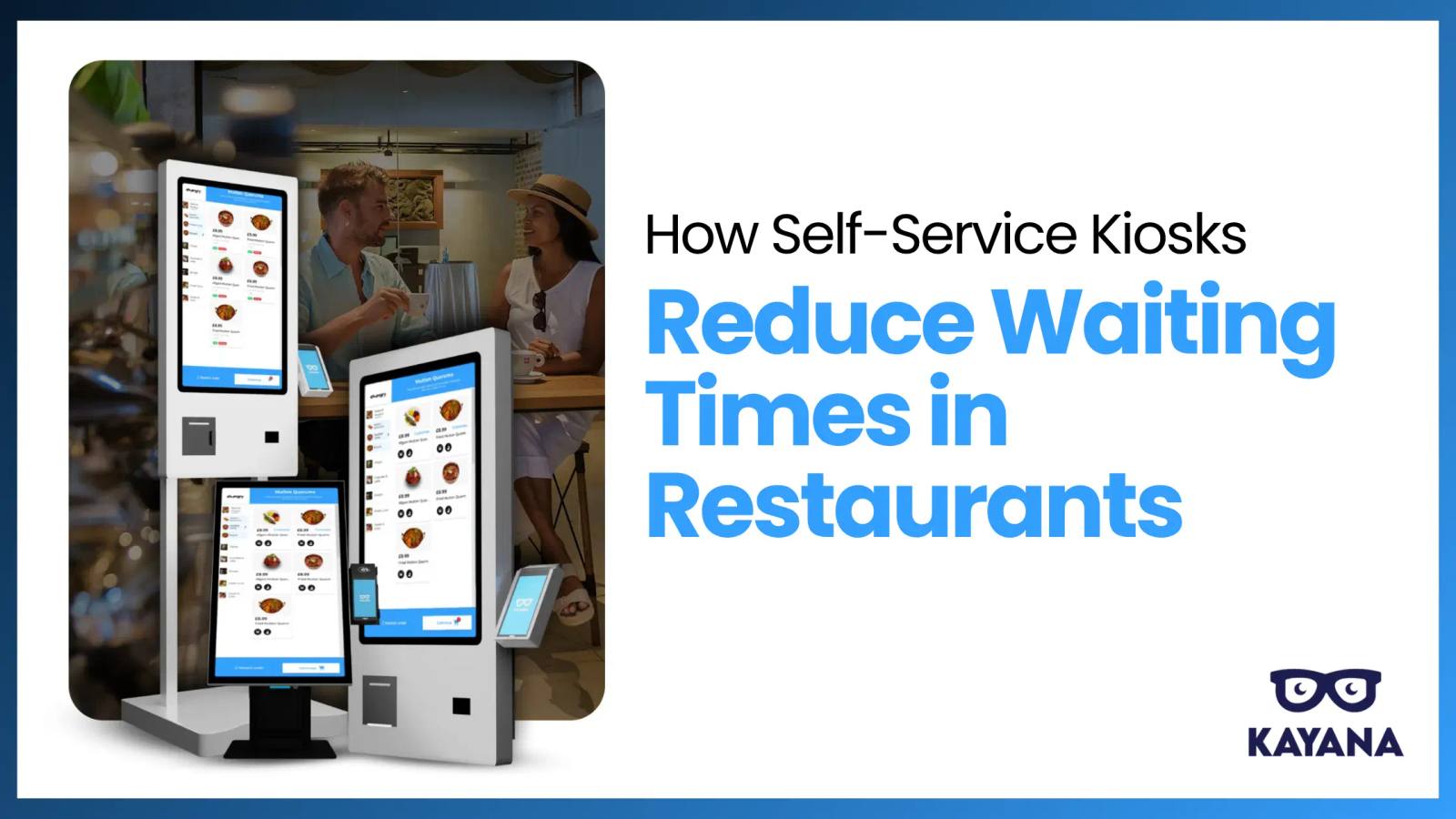
It's Friday evening at your quick-service restaurant. The queue snakes past the door, customers are getting impatient, and your staff look frazzled. That "quick bite" has turned into a 15-minute wait, and orders haven't even been placed. Sound familiar? There's a practical solution that's already helping hundreds of British restaurants cut these painful wait times: self-service kiosks for restaurants.
This technology helps you serve more customers faster, without hiring extra staff or expanding your premises.
The Single Point of Failure Problem
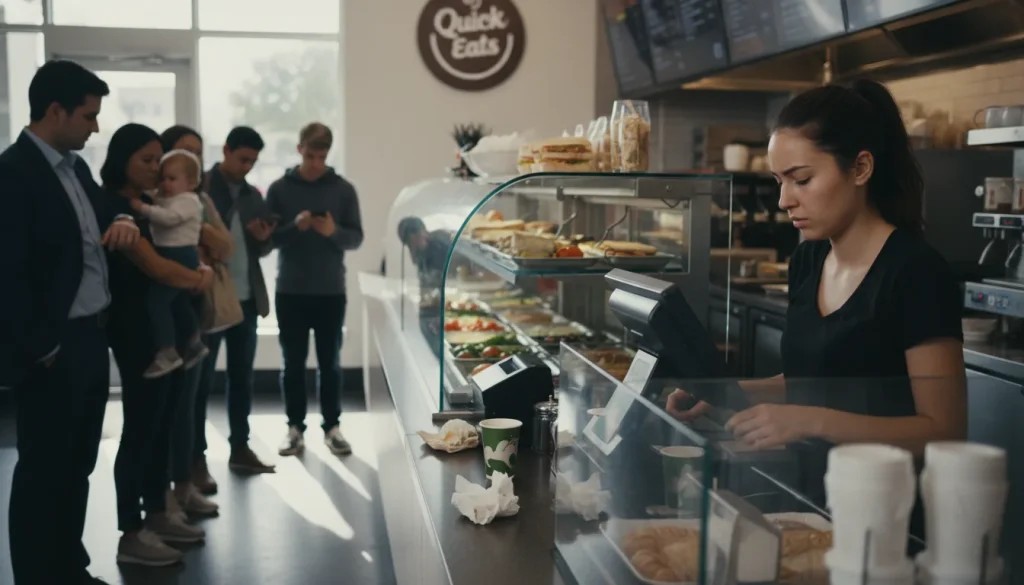
Let's talk about bottlenecks. In traditional restaurant setups, the till becomes what engineers call a "single point of failure". No matter how efficient your kitchen is or how motivated your team is, if you've only got one or two points where customers can order, you're creating an artificial constraint on how many people you can serve.
Think about it: every customer needs to wait their turn, verbally communicate their order, wait for it to be entered correctly, and then complete payment. Even if each transaction takes only 3 minutes, you're processing maybe 20 customers per hour per till during peak times. When lunchtime hits, and 50 people want food at once, the maths simply doesn't work.
Traditional Till vs Self-Service Capacity
Ordering Method | Customers Served Per Hour | Queue Time (Peak) | Processing Points |
|---|---|---|---|
Traditional Till (2 staff) | 40 customers | 10-15 minutes | 2 |
Self-Service Kiosks (4 units) | 80+ customers | 2-4 minutes | 4 |
Hybrid Model (1 till + 3 kiosks) | 65-70 customers | 3-6 minutes | 4 |
Self-service kiosks for your restaurant can change this equation entirely. By adding multiple ordering points, you're essentially multiplying your capacity without the complexity of staffing additional tills. Four kiosks can handle four customers simultaneously, and because most orders via self-service systems are completed in under three minutes, you're looking at a dramatic reduction in queue times.
Reducing queue pressure is only one part of the business case. See the wider advantages of self-service kiosks for restaurants.
Why Speed Matters More Than Ever

Here's something most restaurant owners already know but bears repeating: British consumers won't tolerate long waits anymore. We've been conditioned by Amazon deliveries, contactless payments, and instant everything. When someone pops into a café for a quick lunch, "quick" actually means quick.
But it's not just about keeping customers happy (though that's obviously crucial). Long queues have a direct impact on your bottom line. People who see a massive queue often don't join it. They walk past, choose your competitor down the street, and you've lost that sale entirely.
The Kitchen Connection You Can't Ignore
Here's where things get really interesting. Reducing wait times isn't just about speeding up the ordering process at the customer-facing end. It's about what happens next.
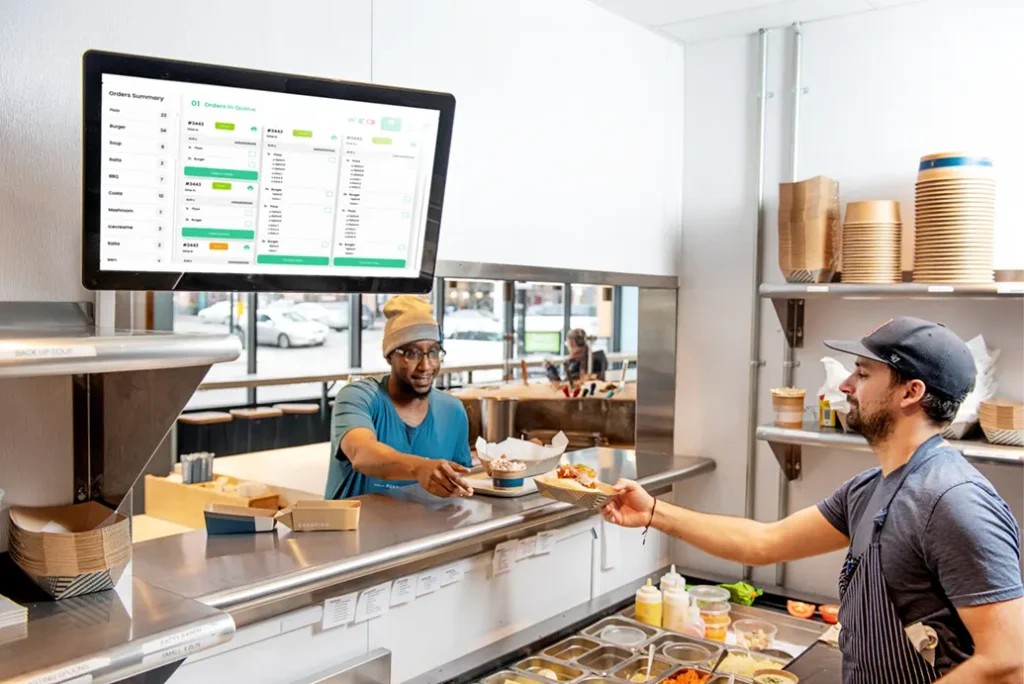
When a customer completes an order at a restaurant's self-service kiosk, the order is transmitted to your Kitchen Display System (KDS) instantly. There's no delay while a staff member walks the docket to the kitchen or keys it into a separate system. Your kitchen team sees the order immediately and can start preparation.
Order Journey: Traditional vs Kiosk
Stage | Traditional Till Process | Self-Service Kiosk Process |
|---|---|---|
Customer Arrival | Verbally communicate to the staff member | Approach any available kiosk |
Order Placement | Browse the menu, select items visually | Integrated payment in the same flow |
Order Entry | Staff inputs order (potential errors) | Customer controls entire order |
Payment | Separate payment step at the till | Separate payment step at the till |
Kitchen Notification | Manual relay or system entry | Instant transmission to KDS |
Average Time | 5-8 minutes (including queue) | Under 3 minutes |
This instant integration with your EPOS and KDS creates a proper end-to-end flow. Payment processes are integrated into the ordering journey, so there's no separate payment queue. The customer orders, pays, and receives a number or a notification, all within the three minutes we mentioned earlier.
The effectiveness of this journey depends heavily on how the kiosk connects to the rest of the operation. Learn whether you need separate systems for EPOS, kiosks, KDS and payments.
Freeing Your Team to Actually Serve
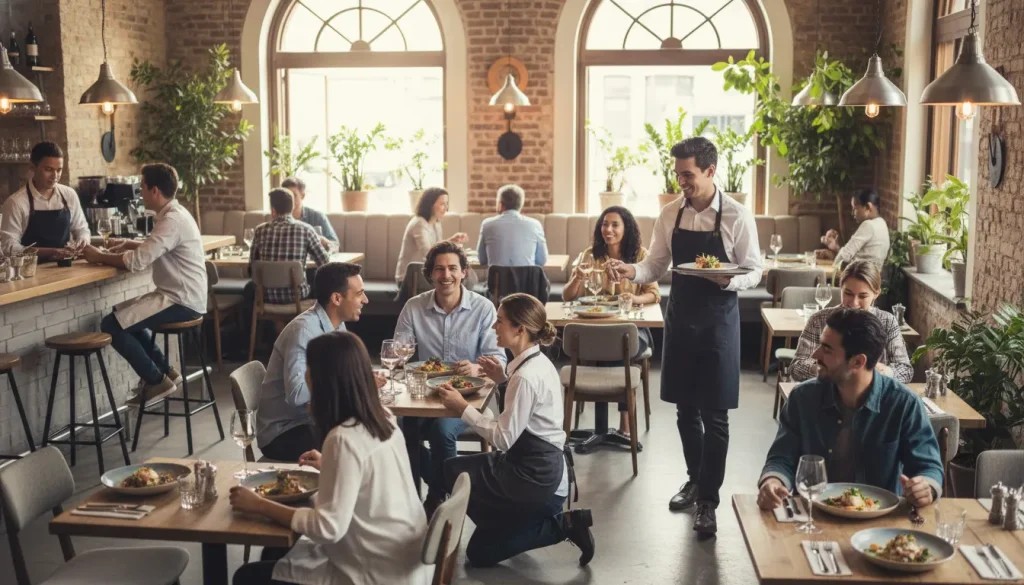
There's a common misconception that self-service technology replaces staff. That's not quite right. What it actually does is reallocate your team's time and energy to tasks that genuinely need a human touch.
Staff Time Reallocation Benefits
Before Kiosks:
70% of staff time is spent taking orders at the till
20% processing payments and handling queries
10% actual customer service and table management
After Kiosks:
20% assisting customers with kiosk queries
30% food preparation and kitchen support
50% high-quality customer service, table management, and complex requests
I spoke to a café owner in Leeds recently who put it brilliantly: "Before kiosks, my best staff members were wasted just pressing buttons on a screen. Now they're actually talking to customers, making recommendations, handling the complex stuff. That's what they're good at."
The Accuracy Factor Nobody Talks About
Want to know what really slows down restaurant service? Fixing mistakes.
When orders go wrong, everything grinds to a halt. The customer has to come back to the till, explain the problem, wait while staff sort it out, and possibly wait for a replacement meal. Even a small error can add five to ten minutes to someone's experience and disrupt your kitchen's flow.
Common Order Errors and How Kiosks Prevent Them
Error Type | Traditional Till Frequency | With Self-Service Kiosks | Time Lost Per Error |
|---|---|---|---|
Mishearing items | High | Eliminated | 3-5 minutes |
Forgotten customisations | Medium | Eliminated | 2-4 minutes |
Wrong meal deal applied | Medium | Eliminated | 2-3 minutes |
Missing special requests | High | Reduced by 90%+ | 3-6 minutes |
Payment discrepancies | Low | Eliminated | 5-10 minutes |
Kiosks dramatically reduce these errors because customers control the entire ordering process. They can see exactly what they're ordering on screen. They can make real-time changes, add special notes, and review everything before confirming.
Strategic Placement Makes a Difference
Here's something that might not be immediately obvious: where you put your kiosks matters as much as having them at all.
Kiosk Placement Options
Configuration Type | Best For | Key Advantage | Space Required |
|---|---|---|---|
Wall-Mounted | Small venues, cafés | Saves floor space | Minimal |
Free-Standing | QSRs, high-traffic areas | Flexible positioning | Moderate |
Countertop | Coffee shops, kiosks | Compact footprint | Minimal |
Outdoor Weatherproof | Drive-throughs, patios | Pre-entry ordering | Variable |
You can even deploy outdoor weatherproof kiosks. Imagine customers being able to place and pay for orders before they even enter your restaurant. This is particularly useful for venues with limited indoor space or those that serve customers on the go.
The Unexpected Upsell Advantage
While we're focused on speed, there's an interesting secondary benefit worth mentioning. Self-service kiosks for restaurants can function a bit like a digital waiter, and they're rather good at suggesting additions to orders.
When you're being served by a person, upselling can feel pushy. But when a screen suggests you might want a side or offers to upsize your drink, customers perceive it differently. It's information, not pressure.
Upselling Performance:
10-25% increase in average order value through automated prompts
No additional transaction time for upsell suggestions
Higher acceptance rates compared to verbal upselling by staff
Consistent messaging across all customer interactions
Real Numbers from Real Operations
Let's get specific about what self-service kiosks can actually deliver:
Key Performance Metrics
Metric | Performance | Business Impact |
|---|---|---|
Average Order Value Increase | 20% | Higher revenue per transaction |
System Uptime | 99.99% | Reliable service during peak hours |
Installation Time | 7 days | Minimal disruption to operations |
Support Availability | 24/7 | Peace of mind for critical periods |
Order Completion Time | Under 3 minutes | Faster customer throughput |
Customer Capacity Increase | 50-100% | Serve more customers per hour |
These aren't theoretical numbers. They're drawn from actual restaurant operations that have made the switch.
The Customer Experience Angle
There's another dimension to the discussion of waiting time worth considering: perceived wait time versus actual wait time.
Why Customers Prefer Self-Service
Control & Convenience:
Browse the menu at their own pace without feeling rushed
Make unlimited customisations without staff judgement
Review order before confirming (reduces anxiety)
Skip verbal communication (useful for those with accents or hearing difficulties)
Speed Perception:
Active engagement feels faster than passive waiting
Visual feedback shows progress through the ordering journey
No dependency on staff availability
Immediate payment confirmation
Even if customers spend the same amount of time ordering, they enjoy the experience more because they're actively engaged rather than passively waiting in a queue.
Integration with Your Existing Systems
A concern I often hear from restaurant owners is about compatibility. "Will this work with what we've already got?"
System Integration Overview
Your Current System | Kiosk Integration | Benefit |
|---|---|---|
EPOS | Direct synchronisation | Unified sales reporting, inventory tracking |
Kitchen Display System (KDS) | Instant order transmission | Faster prep times, better kitchen flow |
Payment Processor | Integrated checkout | Reduced payment errors, faster transactions |
Loyalty Programme | Customer identification | Personalised offers, repeat business |
Analytics Dashboard | Real-time data feed | Better decision-making, trend analysis |
Modern self-service kiosks for restaurants are designed to integrate with existing systems. This isn't about ripping out everything you've invested in and starting from scratch. The installation process is surprisingly quick, typically around seven days from decision to go-live.
When Self-Service Kiosks Make the Most Sense
Self-service technology isn't necessarily the right solution for every restaurant. Here's where it delivers the strongest results:
Ideal Venues for Self-Service Kiosks |
✓ Quick-service restaurants with high customer volumes |
✓ Cafés and coffee shops during peak breakfast and lunch hours |
✓ Fast-casual dining venues where speed matters |
✓ Restaurants with complex menus that benefit from visual browsing |
✓ Venues struggling with staffing challenges |
✓ Locations serving time-sensitive customers (business districts, transport hubs) |
If you're running a fine dining establishment where personal service is part of the experience, kiosks might not align with your brand. But for venues where efficiency matters, they're remarkably effective.
The Support Infrastructure You Need
Technology only works when it actually works. That sounds obvious, but it's worth emphasising.
What Proper Support Looks Like
Support Element | Why It Matters | What to Expect |
|---|---|---|
24/7 Availability | Issues don't wait for business hours | Immediate response during critical trading periods |
Remote Diagnostics | Faster problem resolution | Most issues were fixed without an engineer visit |
On-site Engineers | Hardware failures need hands-on fixes | Next-day response for critical failures |
Uptime Guarantee | Reliability you can depend on | 99.99% operational availability |
Training Resources | Staff confidence and competence | Ongoing support documentation and tutorials |
The 99.99% uptime figure doesn't happen by accident. It requires robust systems, quality hardware, and, importantly, responsive support when things do occasionally go wrong.
Making the Change Without Disrupting Service
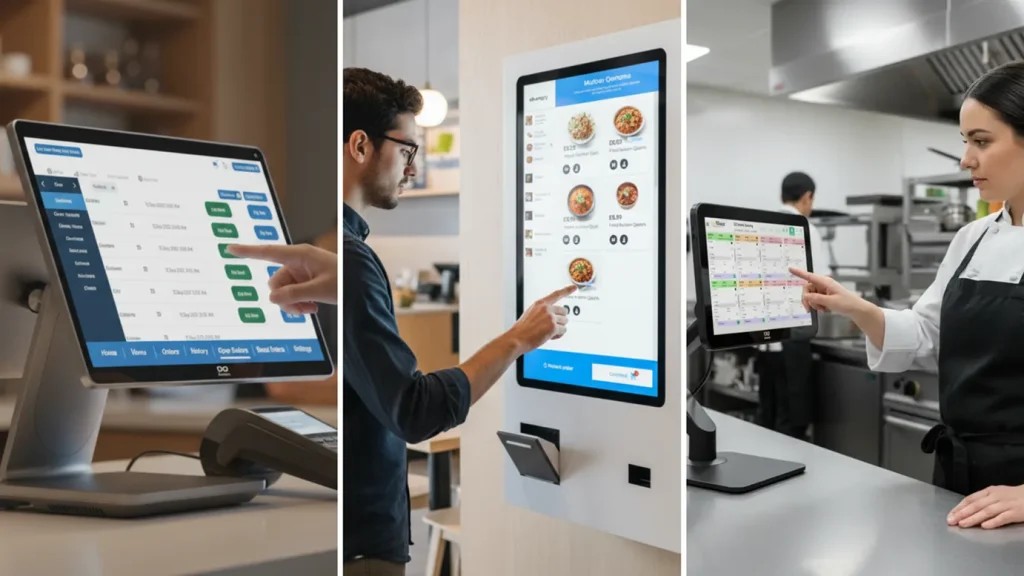
Transitioning to self-service doesn't mean forcing every customer to use it immediately. Most successful implementations use a hybrid approach, with both traditional tills and kiosks operating simultaneously during the initial period.
Typical Implementation Timeline
Week 1: Planning & Site Survey
System compatibility assessment
Optimal kiosk placement planning
Staff training schedule creation
Week 2: Installation (7-day process)
Hardware installation
System integration and testing
Initial staff training
- And on Week 3-4: Soft Launch
Hybrid operation (tills + kiosks)
Customer guidance and support
Performance monitoring
Month 2+: Full Operation
Optimised kiosk-first approach
Ongoing performance review
Staff redeployed to high-value tasks
This gives customers choice and staff time to adapt to the new workflow patterns.
The Bottom Line on Wait Times
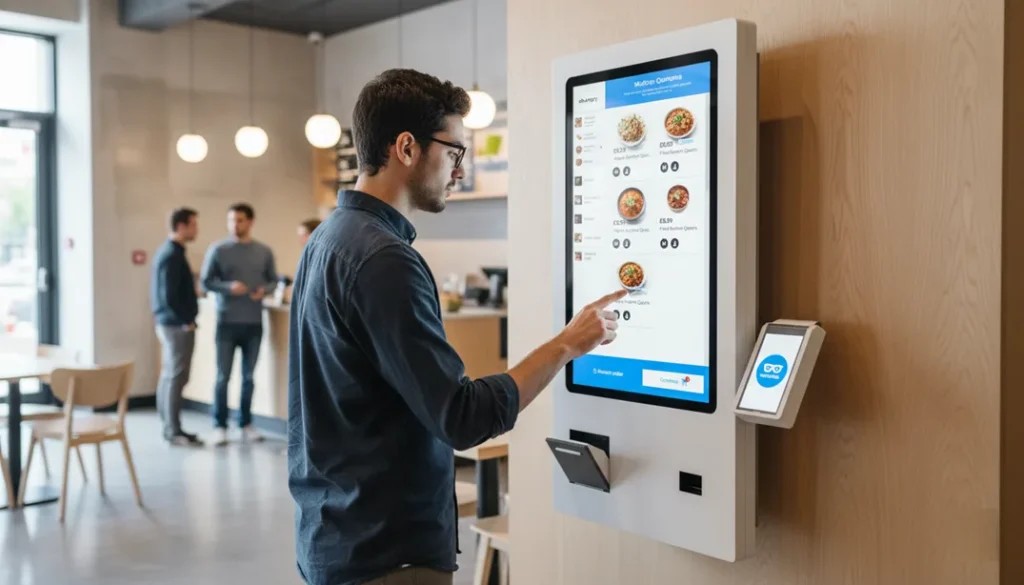
Reducing queue times in restaurants isn't just about customer satisfaction, though that's obviously important. It's about operational capacity, staff productivity, order accuracy, and ultimately, revenue.
The Complete Picture: What You Gain
Improvement Area | Measurable Benefit |
|---|---|
Customer Throughput | 50-100% increase in customers served per hour |
Wait Time Reduction | From 10-15 minutes to under 3 minutes |
Order Accuracy | 90%+ reduction in ordering errors |
Staff Efficiency | 50%+ more time for customer service |
Revenue Growth | 20% increase in average order value |
Customer Satisfaction | Faster service + better control |
Self-service kiosks for restaurant addresses the fundamental bottleneck that limits how many customers you can serve per hour. They integrate instantly with your kitchen, reduce errors, free staff for higher-value work, and create a better experience for customers who value speed and control.
The technology isn't particularly complicated anymore. Installation is measured in days, not weeks. Support is available round the clock. The systems are reliable enough to depend on during your busiest trading periods.
For restaurants struggling with long queues, limited staff, and customers who won't wait, self-service kiosks offer a practical solution that delivers measurable results. Not revolutionary. Just effective technology that does exactly what it promises: helps you serve more customers, more quickly, without compromising on quality.