
Opening a new location site is one of those things that looks straightforward on paper. You've found the right location, signed the lease, and hired a team. Now it's just a case of getting everything up and running. Simple enough.
Except it rarely is.
Between sourcing and installing technology, configuring menus across multiple systems, training staff who may have never used your existing setup, and ensuring the kitchen flows properly from day one, a "simple" opening can eat up weeks of your timeline before you've served a single customer. And for multi-site operators who open several locations a year, that friction compounds. Fast.
This blog is about how the right order processing technology reduces that friction and what that actually looks like in practice.
Why Opening a New Site Is Harder Than It Should Be

Between September 2023 and September 2024 alone, an estimated 1,200 chain outlets launched, a 2.8% increase year-over-year (Food Council UK, 2025). The appetite to expand is clearly there. The challenge isn't ambition. Its execution.
Talk to any operations director who's opened multiple sites, and they'll tell you the same things come up every time:
Technology delays. Hardware that arrives late or requires configuration from scratch at each site.
Menu inconsistencies. You have to manually re-enter the settings that work at your flagship for every new location.
Staff training bottlenecks. New teams need time with unfamiliar systems before service can begin confidently.
Reporting gaps. Head office is flying blind in the early weeks because the new site isn't yet feeding data into the central system.
None of these is catastrophic on its own. But together, they push your break-even date back, frustrate your opening team, and mean your newest location doesn't represent your brand at its best in the crucial first few weeks.
Staff training, in particular, can be a logistical challenge, especially when turnover rates are high or no established training procedures are in place. (The Access Group, 2025).
Payrolled employment in accommodation and food services dropped by around 4.6% between May 2024 and May 2025 (Restroworks, 2025), prompting many teams to form quickly with limited time to prepare before trading begins.
What Fast Setup Requires When Opening a New Location
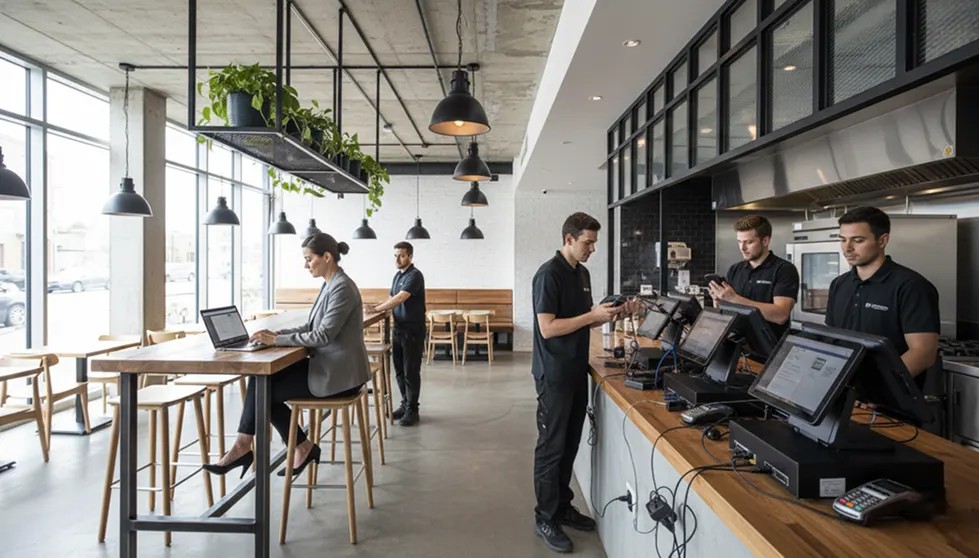
The word "setup" is deceptively small. For a new hospitality or retail site, it covers a lot of ground.
You need your till points live and configured. Your kitchen needs to receive orders accurately from the moment service starts. If you're running self-service kiosks, those need to reflect your current menu, pricing, and any location-specific variations. Your MPOS devices need to connect and sync. And everything needs to talk to the head office.
Any transition and ongoing management will be much easier if you can load your products once, select which sites each product is available on, and set its price. (Tabology, 2024). That's the standard to aim for. One central place to manage menus, pricing, and settings. Push to all sites. Do not re-enter everything from scratch for every opening.
Hardware standardisation, compatibility validation, and swap logistics are core to a business definition of EPOS equipment because this approach reduces variance and shortens deployment time. (Poszeo, 2026). In plain terms: if every site uses the same kit, configured the same way, your deployment team isn't reinventing the wheel each time. They're replicating a proven setup.
That's the model Kayana is built around.
How Kayana Simplifies Opening New Locations Across Your Estate
Kayana's technology is designed for operators who open more than one site. That means the architecture is built for replication, not bespoke configuration each time.
Standardising technology across locations is much easier when ordering, payments, hardware and reporting operate through one connected platform. Learn how Kayana brings ordering, payments, hardware and reporting into one ecosystem.
Here's how the key components contribute to a faster, cleaner opening:
EPOS: One System Ready for Every New Location
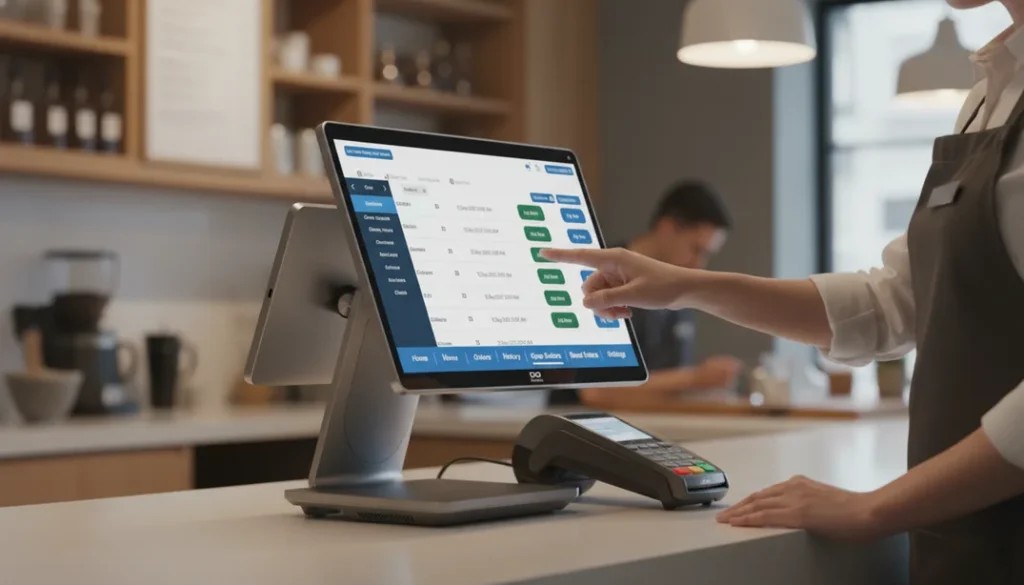
Your EPOS is the nerve centre of any site. It handles orders, payments, reporting, and staff management. If every location uses the same Kayana EPOS setup, your head office team has a consistent view across the estate. Your area managers already know the system. And your new site managers are onboarded onto a platform that the rest of the business runs on.
Multi-site operators typically see 30% faster deployment times when selecting systems designed for scalable operations. (Poszeo, 2026). That's not a small gain when you're trying to hit a specific opening date.
Self-Service Kiosks: Configured Centrally, Deployed Consistently
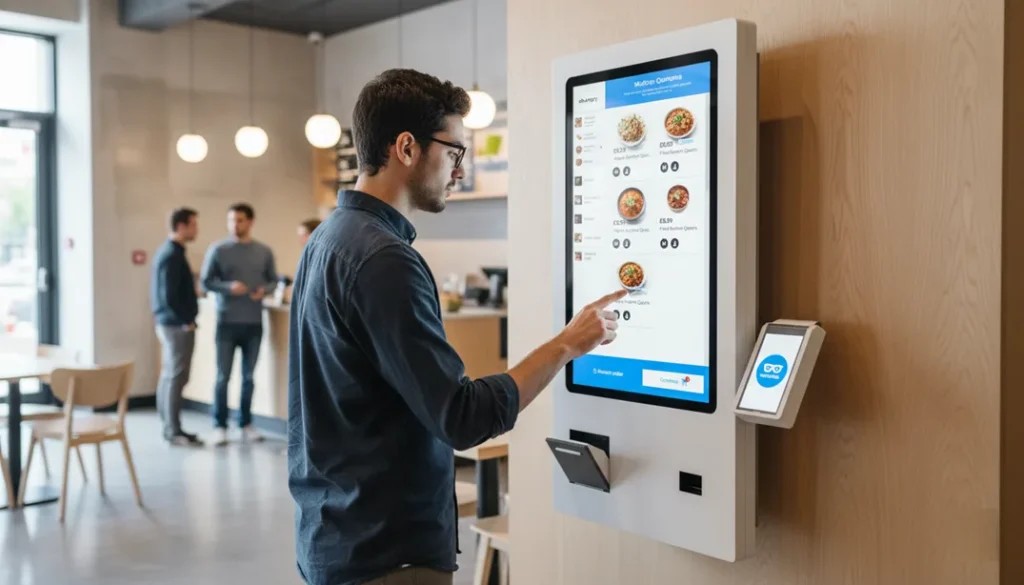
Self-service kiosks are one of the highest-impact additions you can make to a new site. They reduce counter pressure from day one, handle orders accurately without additional staff, and increase average transaction values.
The key for multi-site operators is configurability. With Kayana, kiosk menus and settings are managed centrally. That means when you open a new location, you're not rebuilding your product catalogue from the ground up; you're applying a template with any site-specific adjustments needed. Launch-ready in a fraction of the time it would take from scratch.
KDS: Kitchen Accuracy From the First Service at Every New Location
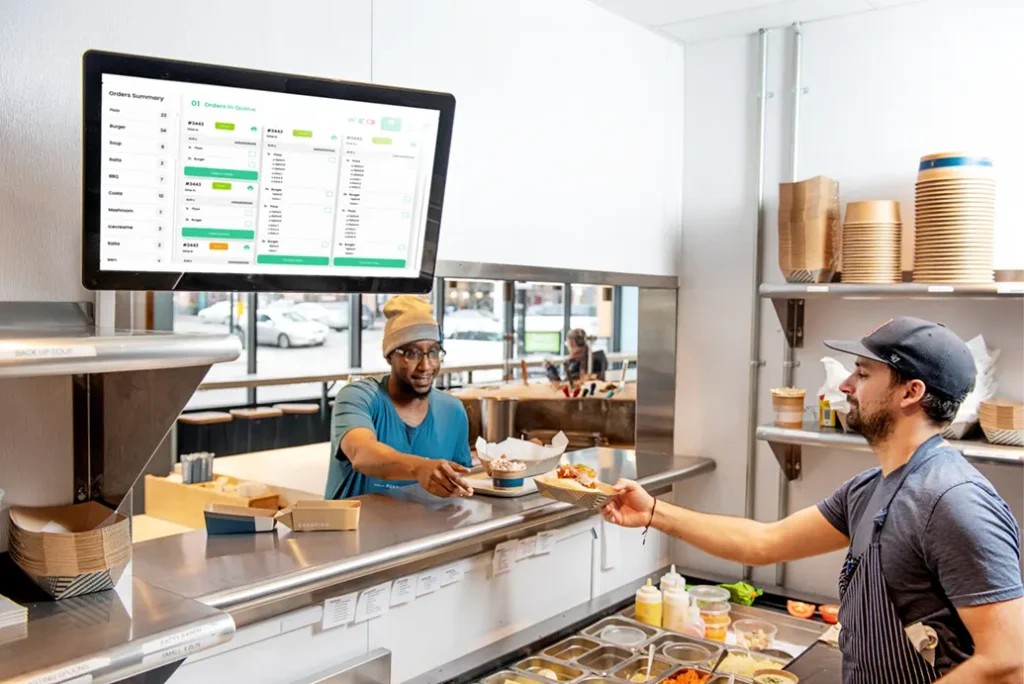
Nothing derails an opening week faster than a kitchen that's working from scribbled tickets or miscommunicated orders. A Kitchen Display System gives your team a clear, digital feed of every order the moment it's placed, from every channel.
Hardware and software testing for new sites will require some time, but the right deployment schedule, including installation during off-hours, can ensure everything is live and tested before the site opens for trade. (The Access Group, 2025).
We install and integrate Kayana's KDS as part of the full technology setup, not as an afterthought.
For a kitchen team that's new to the site and still finding its feet, having accurate, clear orders on a screen from service one is not a small thing.
MPOS: Floor Coverage at Every New Location, Without the Complexity
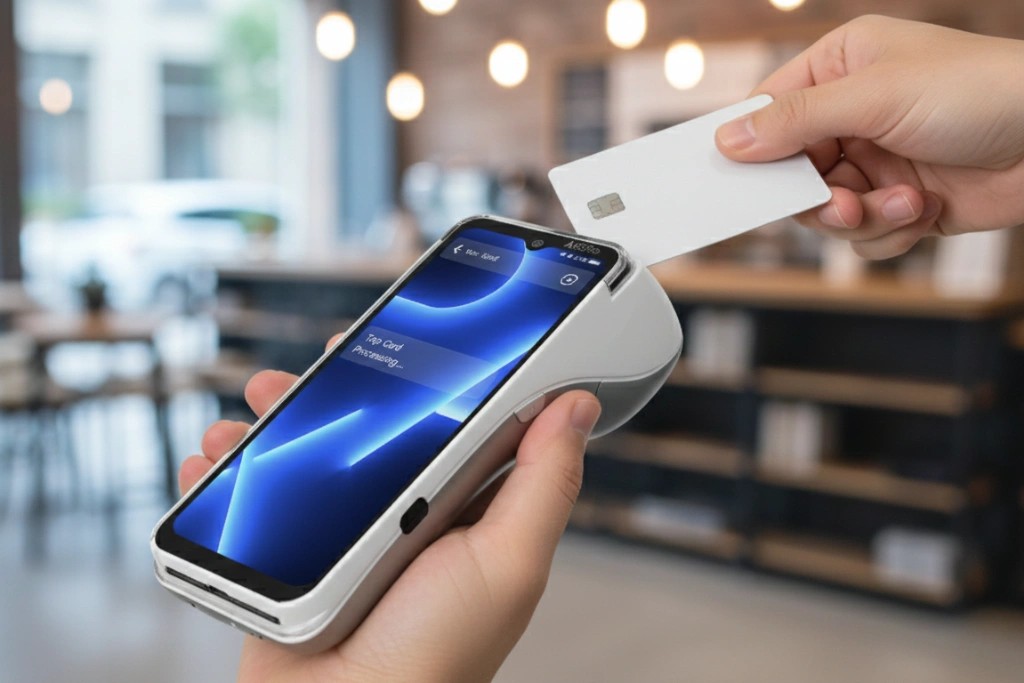
Mobile point of sale lets your floor team take orders and accept payments tableside, without customers having to queue at a fixed till. For new sites, this is particularly useful in the opening period when you're still optimising traffic flow and understanding how customers move through the space.
Because Kayana's MPOS connects to the same central system as your EPOS and KDS, orders taken on the floor route to the kitchen automatically. No duplication. No relay errors.
The Multi-Site Advantage: What Changes at Scale
There's a meaningful difference between opening your second site and opening your fifteenth. The first few expansions feel custom. By the time you're running a serious estate, you want a deployment that's repeatable and predictable.
Situation | Without Standardised Tech | With Kayana's Integrated Platform |
|---|---|---|
Menu setup for a new site | Re-entered manually per location | Managed centrally, applied to new sites |
Staff training at opening | Full retraining on unfamiliar systems | Paper tickets or a standalone display |
Kitchen setup | Staff training at the opening | KDS is integrated and live before the first service |
Head office visibility | Delayed or incomplete | Consistent reporting from day one |
Deployment timeline | Variable, dependent on configuration | Standardised, replicable process |
For an expanding hospitality operation, new venues or pop-up sites can be linked to a single EPOS system, providing instant access to product and pricing data across the whole business. (The Access Group, 2025). That's the standard a serious multi-site operator should expect from their technology partner.
The Cost of Getting a New Location Opening Wrong
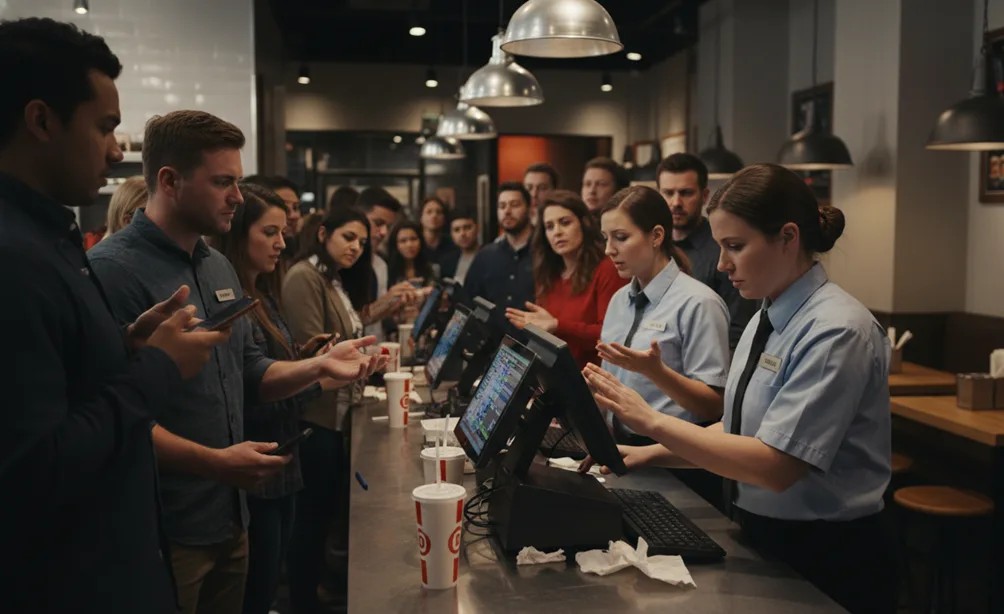
It's worth being direct about what's at stake.
System downtime costs UK retailers an average of £2,400 per hour. For a new site, a botched opening week, systems that aren't ready, kitchens that are confused, and staff who can't use the till aren't just operational headaches.
It affects first impressions, early reviews, and the team's confidence in a period when everything is already heightened.
Chains and franchised operators have demonstrated stronger survival rates due to economies of scale, brand loyalty, and access to capital. A significant part of that advantage is operational consistency.
Every site runs the same way.
Every customer gets the same experience.
And every manager reads from the same dashboard.
That's not possible if your technology setup varies from one site to the next.
What to Expect When Opening a New Location With Kayana
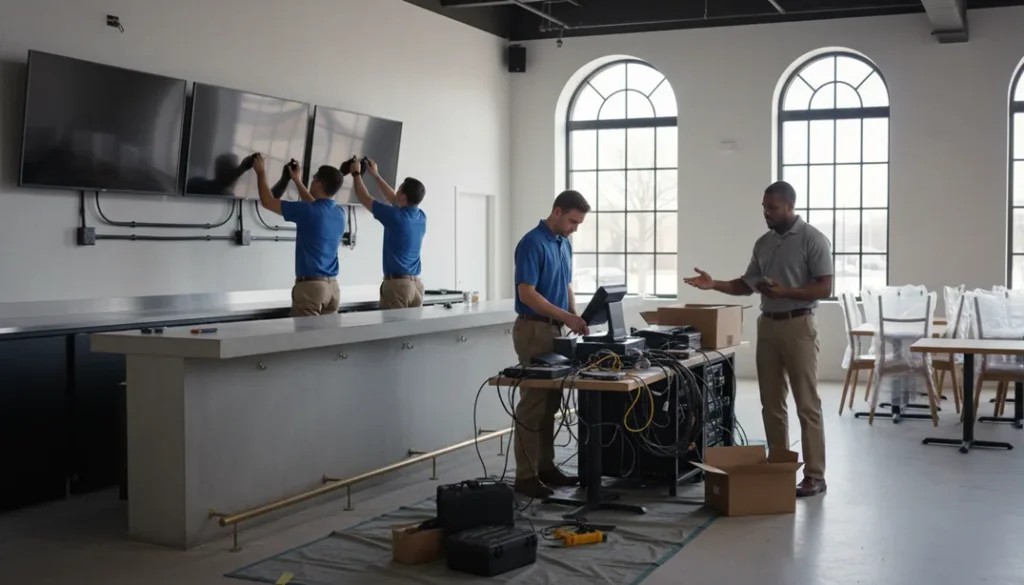
One thing worth saying clearly: no technology rollout is completely friction-free. New sites have unique layouts. Counter configurations vary. Multi-site operators frequently encounter varied counter layouts and cable routing limitations, especially in older sites, as well as mixed mounting requirements. (Poszeo, 2026). Good technology partners account for this. They don't just send equipment in a box.
Kayana works with your operations team ahead of opening to understand the site layout, agree on hardware placement, and ensure the configuration is right before the first customer walks in.
That means you get field engineers who know the product, a setup process we've refined across multiple deployments, and support that doesn't disappear after go-live.
Multi-site businesses will typically start with a pilot in one venue to ensure the system is a good fit before kicking off a phased switchover across the rest of the estate. (Tabology, 2024). If you're evaluating Kayana for a larger rollout, that's a sensible place to start. One site. Real service. Real feedback. Then scale with confidence.
What a Successful New Location Opening Looks Like with Kayana
To pull this together: a well-run technology-backed new site opening looks something like this.
In the weeks before opening:
The central team pushes the menu and pricing config to the new site from the head office
Hardware is delivered pre-configured and tested
KDS is installed and integrated during fit-out
Staff complete familiarisation on the same Kayana platform used across the estate
On opening day:
EPOS tills live, pulling from central config
Self-Service kiosks are operational with the current menu and pricing
Kitchen receiving orders via KDS from the moment service starts
MPOS devices active on the floor
The head office is able to pull the same-day reporting from the new site
In the weeks after:
Performance data feeds into group reporting alongside existing sites
Any teething issues are addressed by Kayana support without needing on-site engineers for minor adjustments
Area manager reviews the new site on the same dashboard as every other location
That's what a clean opening looks like. It's achievable. It just requires the right infrastructure in place before the doors open.
Ready to Talk?
If you're planning a new site opening or looking at how to make your next rollout faster than the last one, Kayana's team can walk you through what a deployment would look like for your specific setup.